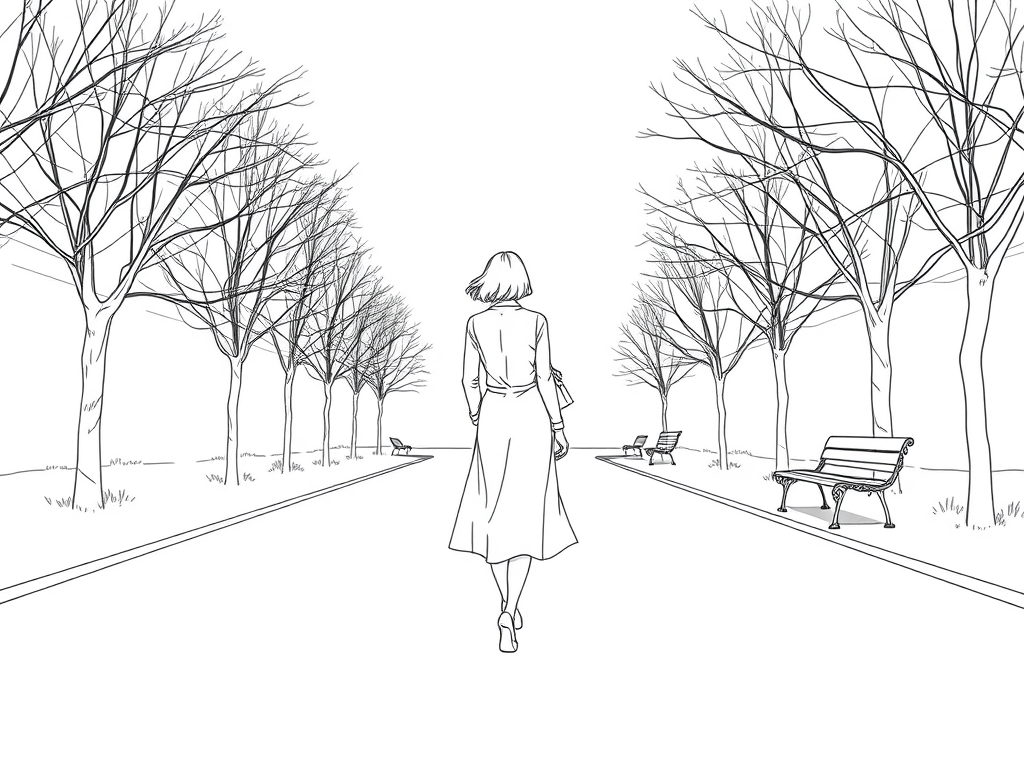
Reflections on life, loss, and the quiet art of being present.
A few days ago, an aunt of mine passed away.
Death has that strange and unavoidable effect: it doesn’t only speak of endings, but forces us to look at its opposite — life. At how we are living it. At what we postpone. At what we value without really thinking about it.
There were no grand epiphanies, just silence. And it is often in silence that the most honest questions emerge. What does it really mean to live well? What does happiness mean? And is happiness even the point?
It was in this context — and also revisiting a piece I wrote for Vogue Portugal, published in March 2025 — that I felt the need to return to this subject. With less analysis and more presence. With fewer answers and more listening.
In that original article, I wrote that “rather than being a permanent state, happiness reveals itself in moments” (Fleming, 2025). I still believe that to be true — perhaps even more so now. Life does not unfold as a continuous state of well-being, but in fragments: good days, difficult days, and many days that are simply neutral. And all of them matter.
“Rather than being a permanent state, happiness reveals itself in moments.”
— Pureza Fleming, Vogue Portugal, March 2025
For a long time, we were taught to pursue happiness as a goal — something to achieve, sustain, and quietly feel guilty about when it slips away. But psychology and biology tell a different story. Well-being is not a destination; it is an unstable balance between emotions, body, habits, and context. A subtle dance between what we feel and what happens inside us.
As I wrote in Vogue, “happiness outside of capsules exists — in habits” (Fleming, 2025). Sleeping better. Moving the body. Eating with more attention. Creating pauses. Setting boundaries. Celebrating small wins. The brain responds to this. It appreciates predictability, safety, and modest but consistent rewards.
But knowing how to live also means avoiding romanticism. There are moments when positive thinking is not enough. When real suffering or illness is present, structure, support, and treatment matter. Mental health deserves the same seriousness as physical health.
One of the most striking ideas I came across while researching the original piece was how quickly the brain adapts — to both extreme joy and deep loss. Studies suggest that, after a period of adjustment, we tend to return to our baseline level of happiness. As I wrote then, “what today feels like a major achievement or a major setback often becomes tomorrow’s new normal” (Fleming, 2025).
This does not diminish pain, nor does it trivialise joy. But it does suggest that happiness may not live in peaks, but in what remains once the impact fades: purpose, relationships, and experiences that connect us to others.
If there is one constant across conversations about well-being, it is the importance of relationships. The human brain is social by nature. It needs connection, contact, reflection. A hug, an unhurried conversation, a shared silence — these regulate emotions, reduce stress, and create a sense of safety.
Perhaps that is why life asks less for euphoria and more for presence. To step out of autopilot. To notice. To stay. To pay attention to small things — a sunset, a song, a coffee taken slowly. Simple moments, but structurally important ones.
And money? The answer remains “yes and no”. Financial security reduces anxiety and creates conditions for caring for mental health. But beyond a certain point, its impact fades. Money does not buy purpose, relationships, or inner calm — inconvenient as that may be.
In the Vogue piece, I wrote that “expecting to be happy all the time and discarding uncomfortable emotions is an unrealistic expectation” (Fleming, 2025). Sadness, anger, fear are part of the deal. They are not flaws — they are evidence of being human.
“Expecting to be happy all the time and discarding uncomfortable emotions is an unrealistic expectation.”
— Pureza Fleming, Vogue Portugal, March 2025
In the end, happiness may not be a destination, but a by-product. Not something to chase, but something that emerges when we learn to live with nuance. When we accept life’s highs and lows without denying what hurts or idealising what feels good.
Death reminds us of this with unsettling clarity. That time is finite. That life is imperfect. And that, perhaps, the most important thing of all is exactly this: knowing how to live.
 OBSERVATIONS & OTHER ACCIDENTS
Leave a comment