Fashion on Film: how the world’s leading houses are turning campaigns into cinematic stories.
Launched on 26 November 2025, the Jacquemus × Nike Après‑Ski collection arrived accompanied by a film that immerses viewers in an alpine universe — snow, chalets, technical silhouettes, and a reimagined mountain spirit. This is not just a product launch; it’s a cinematic invitation to experience a lifestyle where performance meets aesthetics.
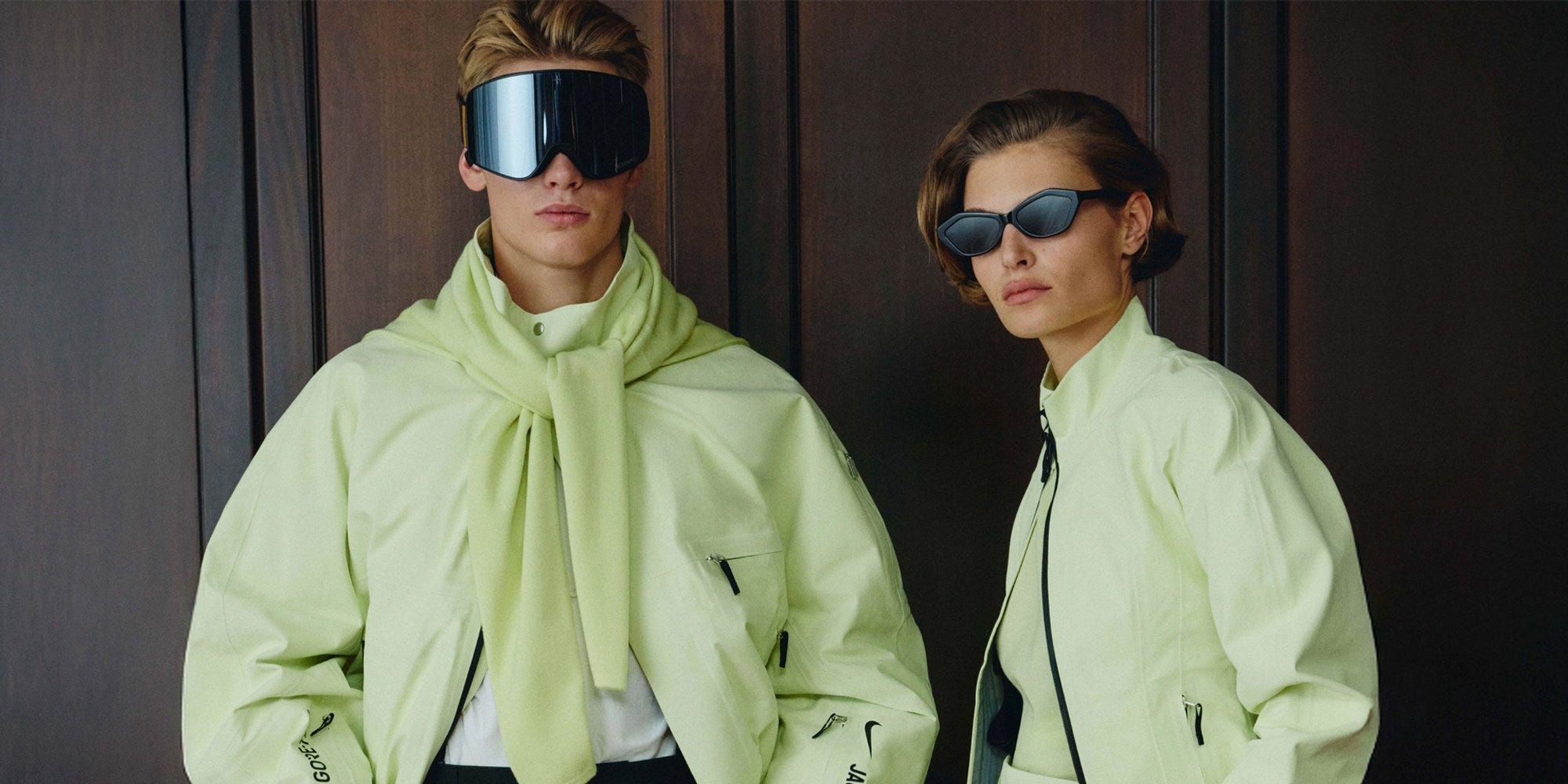
Nike x Jacquemus Après Ski Collection (Nov. 2025)
The collection’s 18 pieces are designed not only for extreme conditions — GORE‑TEX jackets, layered pants, insulated outerwear — but also to captivate visually. The film transforms clothing into a gateway: to a world, a mood, a story, rather than just an item to buy.
Fact is, many of the world’s leading luxury houses have shifted focus from traditional campaigns to cinematic storytelling. As Monocle notes, conglomerates are investing directly in entertainment — acquiring stakes in talent agencies, creating in-house media divisions, and producing films and series that extend their brand ethos.
The objective is clear: fashion is no longer just about garments; it’s about constructing myth, memory, and cultural identity. Cinema allows brands to create narratives that resonate emotionally, giving depth and permanence to their aesthetic vision.
Examples Leading the Shift
Gucci — Theatrical Storytelling
In September 2025, under creative director Demna Gvasalia, Gucci replaced a conventional runway show with the 33-minute film The Tiger, directed by Spike Jonze and Halina Reijn, starring Demi Moore. The film presents a birthday party for a matriarch whose family dynamics spiral into drama and tension. Each look becomes part of a theatrical narrative.
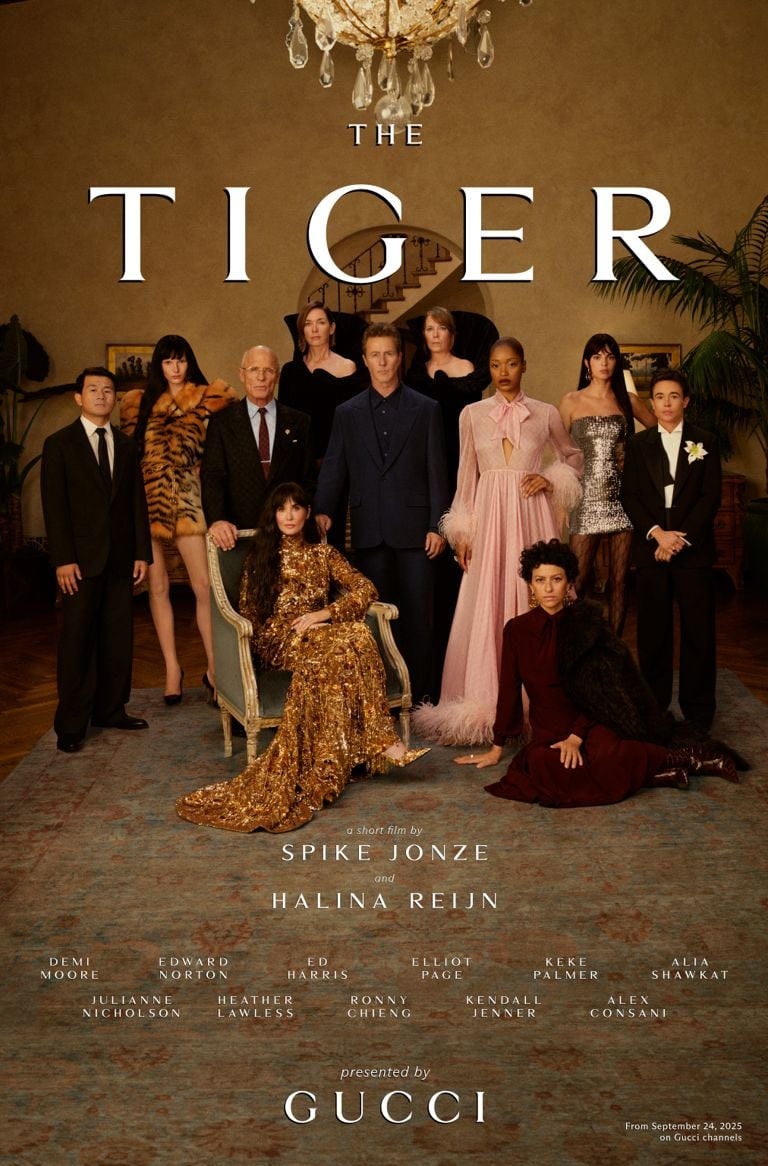
Gucci — Just like on cinemas
This cinematic approach transforms Gucci from a fashion label into a cultural experience, blending irony, decadence, and glamour. The film was shared globally, reinforcing Gucci’s relevance as both luxury brand and cultural storyteller.
Prada — Off-Kilter Storytelling
Prada has long used cinema to explore style and narrative. Historically, films like A Therapy (2012), directed by Roman Polanski, turned clothing into narrative devices, where garments symbolised desire, obsession, and social dynamics.
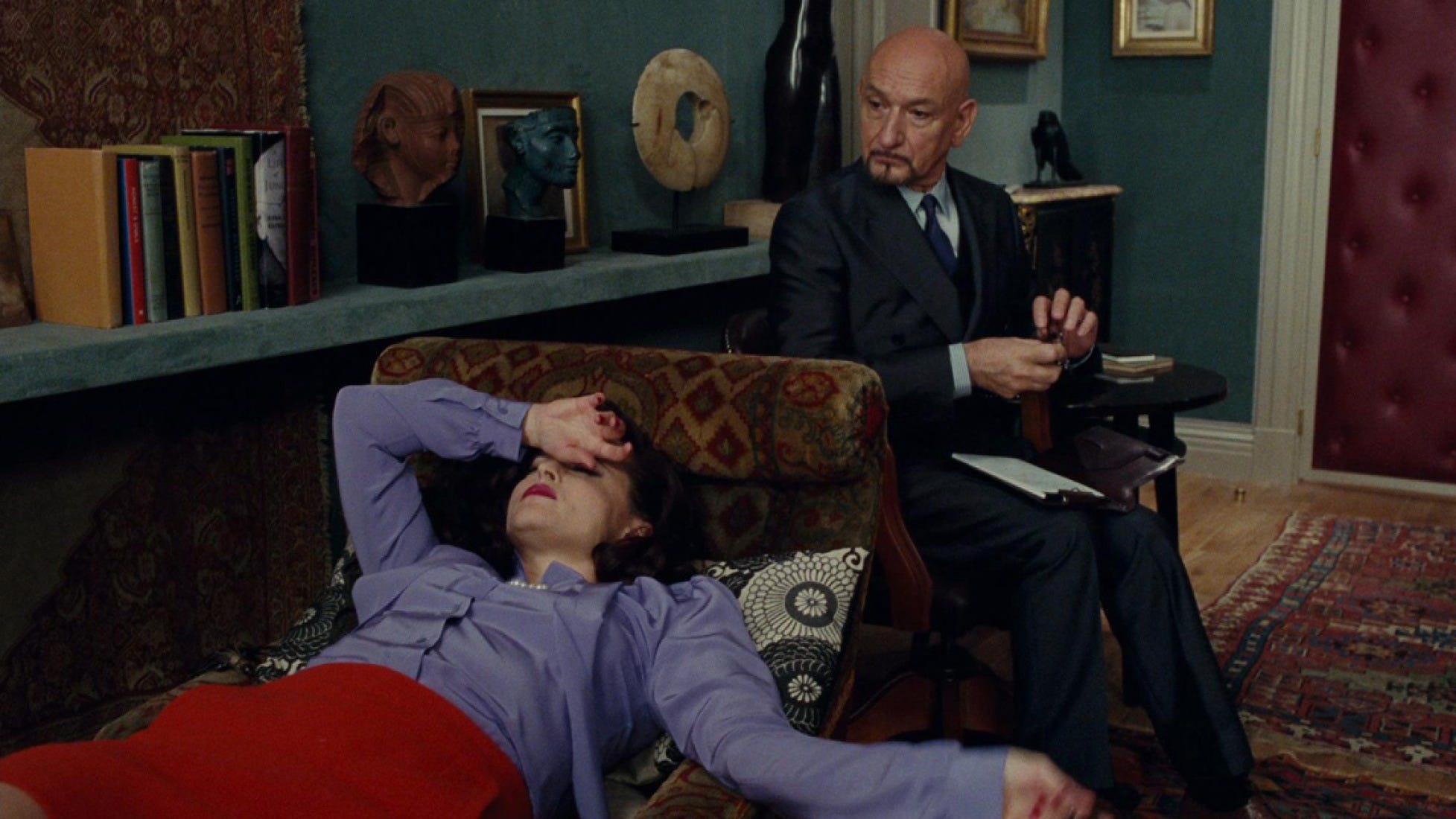
“A Therapy” Prada campaign (2012)
More recently, Prada released a short film directed by Yorgos Lanthimos (The Favourite, Poor Things) starring Scarlett Johansson. Dropped a week before Gucci’s The Tiger, the nearly two-minute film shows Johansson performing instructions for a witchcraft-adjacent ritual — collecting “rainwater that drips from a non-blooming cherry tree,” “the recorded barking of a medium-sized dog,” and “three drops of blood drawn at nighttime.” The film concludes with a Frankenstein twist: a Johansson clone appears holding a charcoal-coloured Prada Galleria bag. While it is not overt marketing, it perfectly captures Prada’s off-kilter edge and remains highly memorable, reinforcing its identity as a brand that embraces cinematic experimentation.
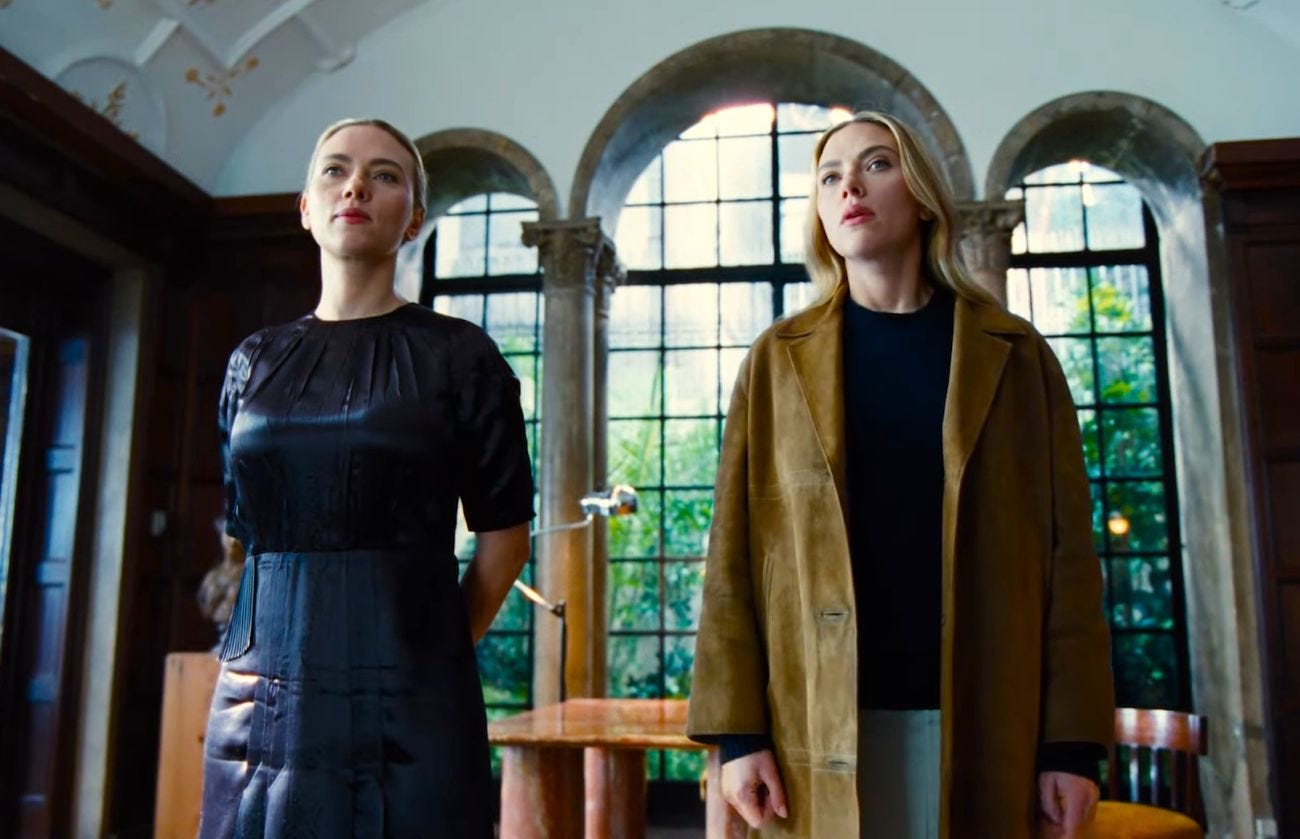
Scarlett Johansson for the Prada Galleria bag (2025)
Burberry — Festive Cinematic Storytelling
Since 2016, Burberry has turned its Christmas campaigns into cinematic experiences. The Tale of Thomas Burberry (2016) dramatised the founder’s legacy, while Close Your Eyes and Think of Christmas (2018) presented a whimsical, surreal vision of a British Christmas. The Night Before (2022) captured the excitement of festive preparations with a contemporary, multicultural lens, and the latest campaign, Twas the Knight Before (2025), continues this tradition, featuring iconic faces such as Naomi Campbell and Rosie Huntington‑Whiteley. Each film goes beyond clothing, transforming seasonal campaigns into narratives that reinforce Burberry’s heritage, creativity, and storytelling prowess.
Saint Laurent — Urban Cinematic Storytelling
Saint Laurent invested directly in cinematic production, launching its own production company in 2023 to create documentaries and fiction films. This allows the brand to control narrative and cement its position as a cultural entity beyond clothing.
A notable example is the short film Saint Laurent: Supernova, which blends fashion, music, and urban visuals to create a striking, immersive brand experience.
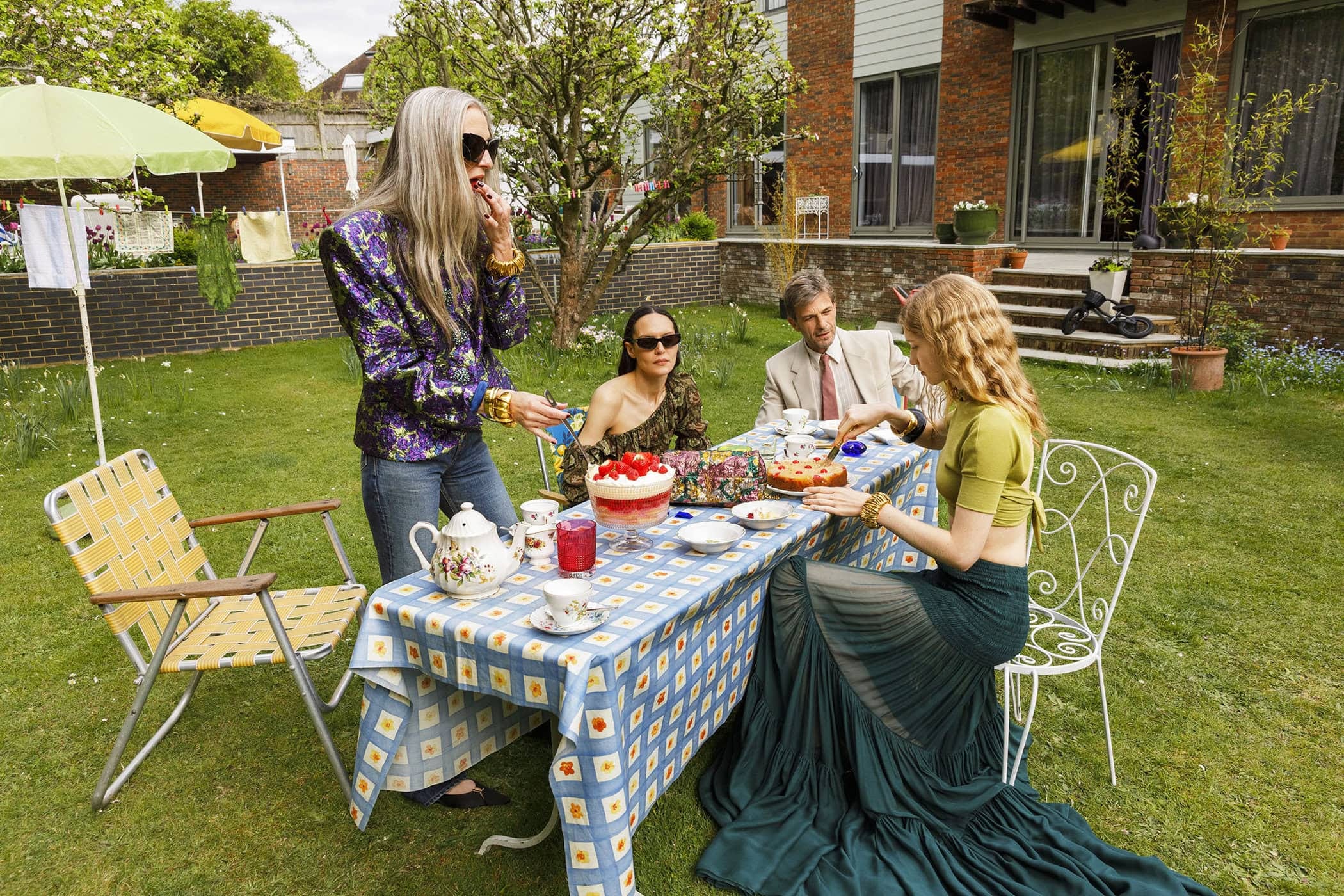
“An Ordinary Day” Saint Laurent Campaign (2025)
Other fashion houses have explored the medium — poetic shorts, festival-backed projects, and collaborations with directors — reinforcing fashion as a visual culture rather than merely a commercial enterprise.
What This Means for Consumers
- Fashion is no longer only about products — it’s about worlds.
- Narrative, atmosphere, and myth are now as valuable as the garments themselves.
- Films elevate pieces from clothing to symbols, from performance gear to cultural artefacts.
- Brands producing cinema shape imagination, creating identity, aspiration, and emotional engagement for the audience.
So, next time you see a fashion film, ask yourself: are you drawn to the piece itself, its functionality, or the universe it embodies? More than clothing, these films sell stories — perhaps the one you’ll want to step into next.


Leave a Reply