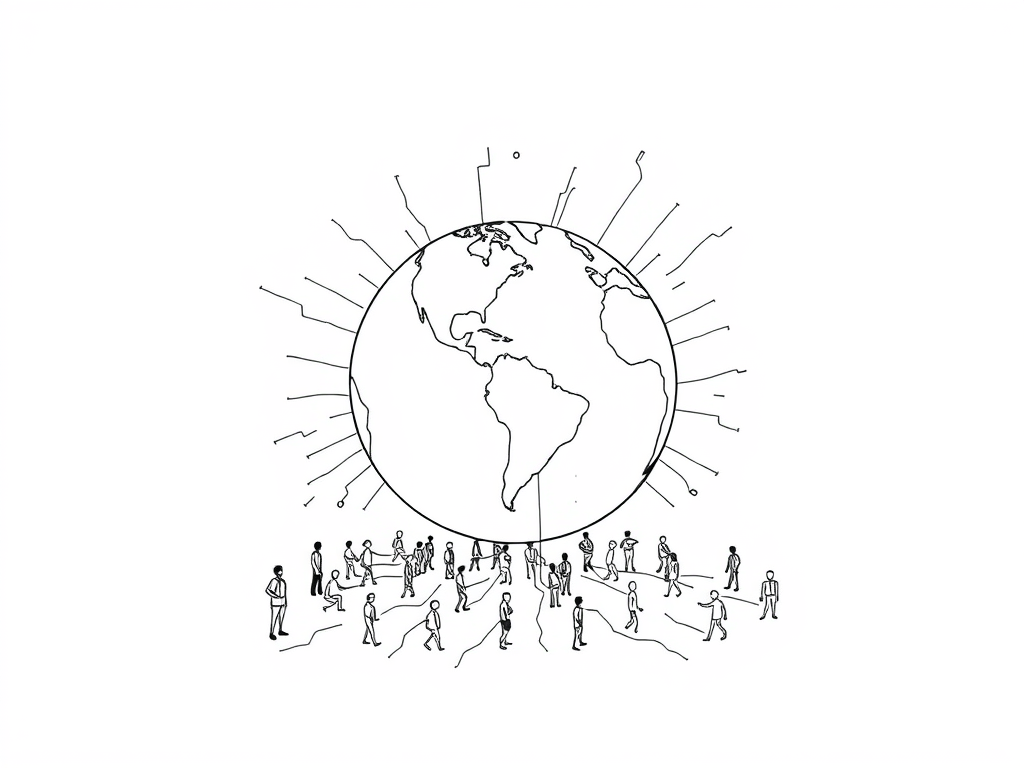
On pessimism, media and the quiet erosion of optimism.
The other night I woke up in tears. A restless dream — the kind that leaves the body on edge even after waking. It was nothing new: images of violence, fragments of fear, remnants of a period of my life spent in Brazil, lived for a while in a near-constant state of alert. A distant, resolved phase, one that rarely occupies my conscious thoughts today. My life is different now — calm, safe, happy.
And yet, something insists on seeping in.
Perhaps because we live immersed in a constant stream of bad news. Violence does not happen to us — but it reaches us every day. Through television, yes, but above all through social media, where horror has neither pause nor context. An endless succession of images, alarmist headlines, faceless statistics. Even when we are well, we are repeatedly prompted to feel that the world is not.
Violence does not happen to us — but it reaches us every day.
Last week, I wrote here about the importance of being a little unsettled — because numbness is far from ideal. We need to look at the world with a certain coolness; to remain aware of what is happening around us, if only to gain perspective and make our present privileges and comforts feel more tangible. In that same piece, I offered a gentle critique of futility. It hardly needs further explanation: one only has to open social media to see it.
The question in this text is a different one. It concerns the violence that enters our homes every day, every minute, through the media — media that rarely allow space for what is still good in the world and in life.
As I read in a recent The Economist article, “today positive energy is in short supply,” the magazine writes. Pessimism has ceased to be episodic and has become persistent — almost a baseline state. A survey conducted by FGS Global, cited in the same piece, questioned around 20,000 voters and business leaders across 27 countries, from America to Europe, from Canada to Japan. The consensus is unsettling: the majority believe that life will be harder for the next generation and that the system is rigged in favour of the rich.
This kind of collective despondency is not harmless. The Economist goes further, moving into economic territory: when pessimism becomes entrenched in advanced economies, it can turn into a self-imposed drag on growth. A vicious cycle — less confidence leads to less investment, less risk, less future. Fear ceases to be merely emotional; it becomes structural.
(cigarette break)
During this brief pause, I open Instagram — something I do with increasing restraint — and the first post the algorithm offers me begins with “Disturbing Content”. The rest is predictable. It was from CNN International, but this is far from an isolated case. On the Observation & Other Accidents account, I follow only pages connected to my professional activity. Which means, inevitably, following many media outlets.
And what I observe — the blog’s name is no coincidence — is that all of them, without exception, now operate as only sensationalist media once did. They thrive on what sells: drama, horror, shock. One could blame the algorithm. It is not that simple. I report this kind of content frequently. Because it is no longer only the nearby war — which we have a duty to follow, for many reasons. It is anything that shocks — regardless of scale, relevance or consequence — provided it can be made visually striking, even graphic. The result is a relentless stream of images designed so our eyes miss nothing and our minds grow accustomed to horror. Good news, we know, does not sell.
All of them [the media], without exception, now operate as only sensationalist media once did. They thrive on what sells: drama, horror, shock.
Perhaps this is what the body senses when it wakes abruptly in the middle of the night. Not a specific trauma, nor a concrete memory, but a diffuse anxiety, fuelled daily by a world that always seems on the brink of something.
The question, then, is not only how we protect ourselves from real violence — but how we defend ourselves against this silent erosion of optimism.
 OBSERVATIONS & OTHER ACCIDENTS
Leave a comment