The day Haute Couture forgot the body.
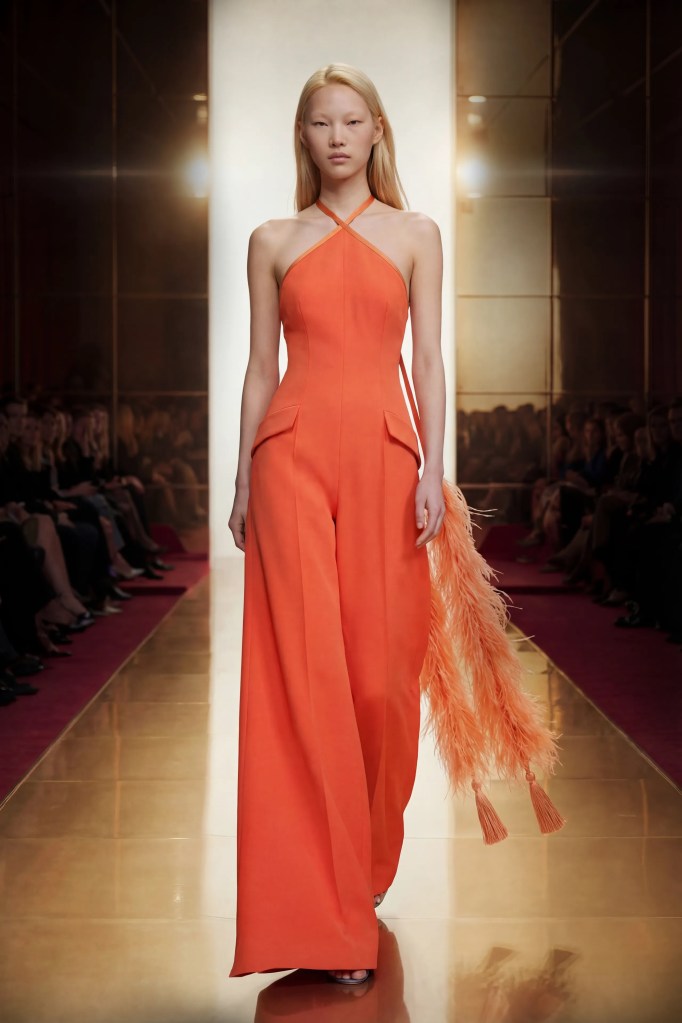
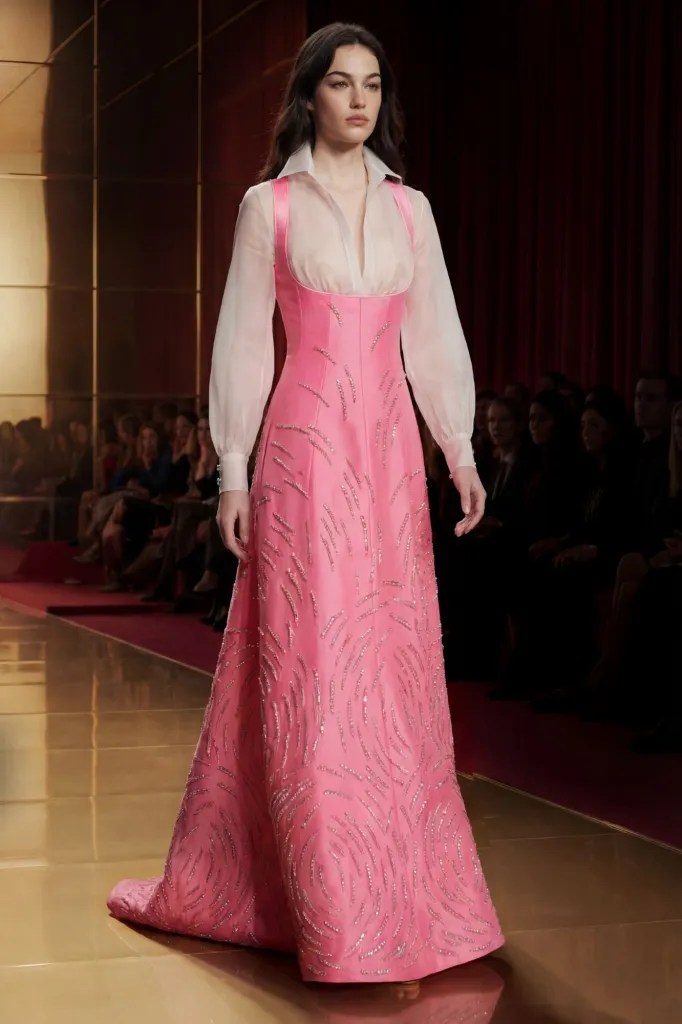
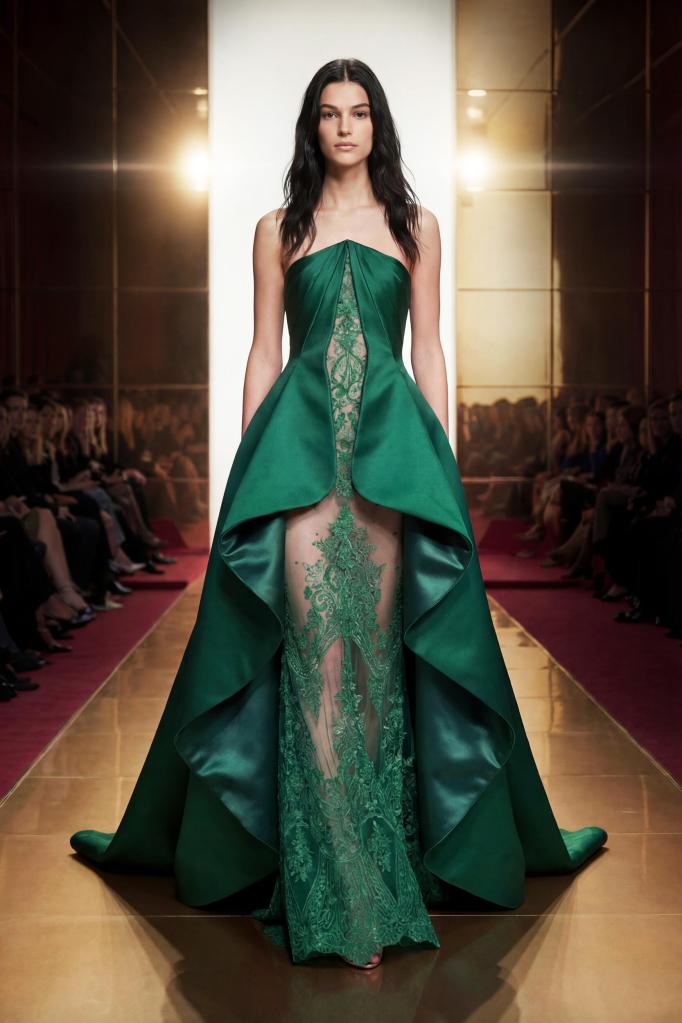
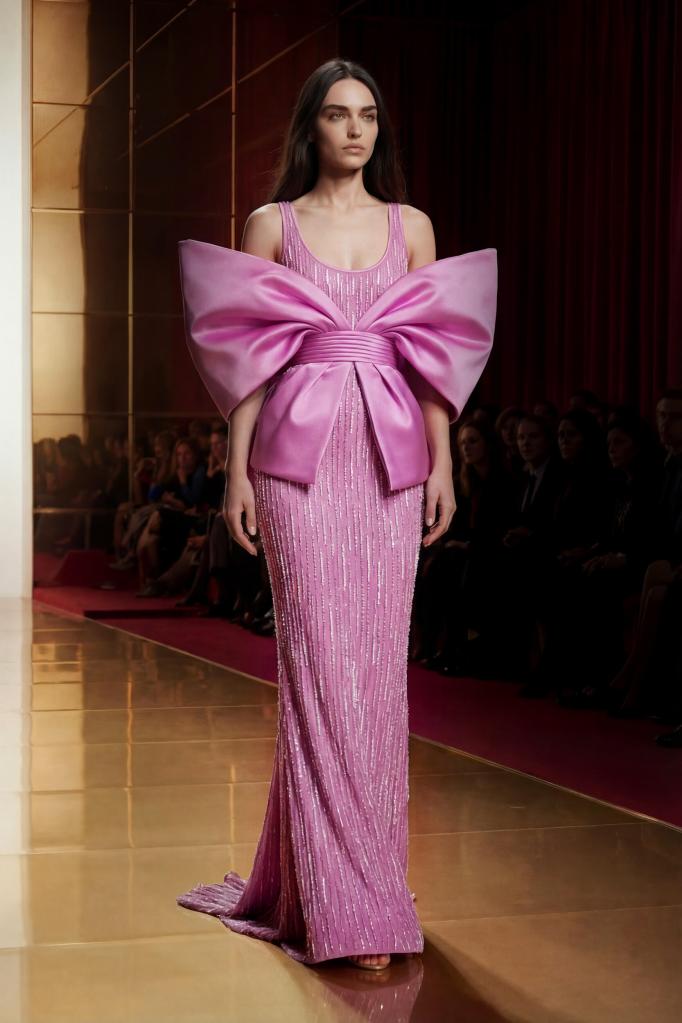
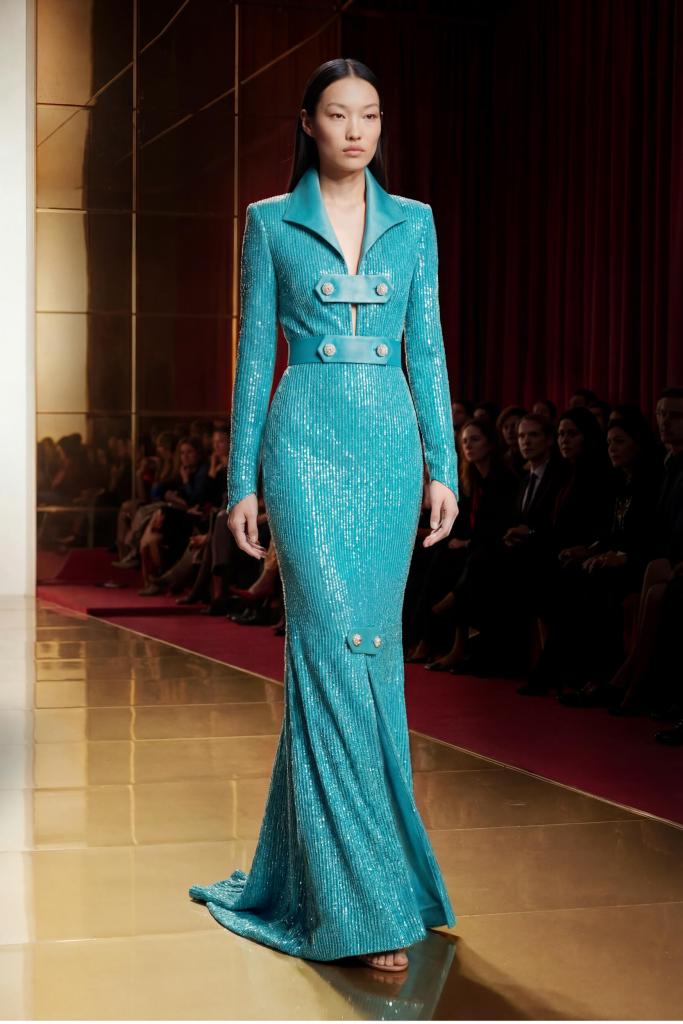
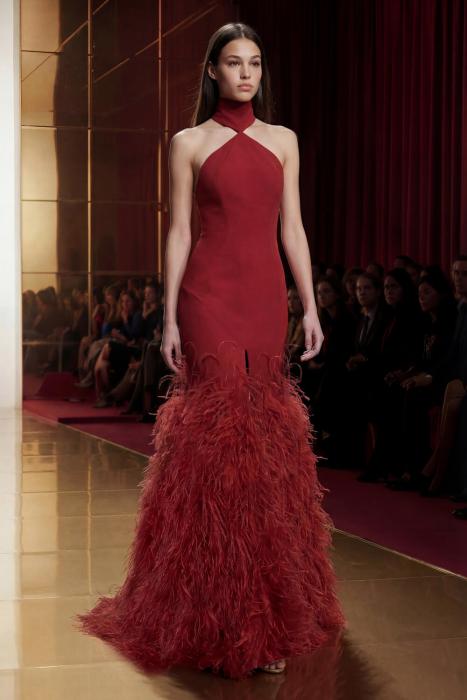
When one thinks of haute couture week — a space where every stitch is expected to affirm humanity — Alexis Mabille chose to present a collection whose singularity lay not only in the garments, but in how they were shown. Instead of live models, the designer unveiled a runway populated entirely by artificial intelligence, projected across wraparound screens in what marked a first for a fashion house.
The gesture invites an unavoidable question: when everything can be simulated, what remains true in fashion?
Instead of live models, the designer unveiled a runway populated entirely by artificial intelligence, projected across wraparound screens.
If there are domains where artificial intelligence may — and perhaps should — enter without hesitation, there are others that call for restraint. Haute couture has always been one of them. Not merely because of technique, but because of ritual. Because of time. Because of the hand that falters ever so slightly and, in that imperfection, proves that someone is there.
Art does not emerge from algorithms. It springs from human excess — obsession, doubt, memory, the almost irrational desire to create something that did not previously exist.
And yet Alexis Mabille belongs to a lineage that has long celebrated craftsmanship. Born in Lyon in 1977, he trained at the Chambre Syndicale de la Couture Parisienne before apprenticing at Ungaro and Nina Ricci, later joining Christian Dior, where he designed jewellery and accessories under figures such as John Galliano and Hedi Slimane.
Alexis Mabille belongs to a lineage that has long celebrated craftsmanship. Born in Lyon in 1977, he trained at the Chambre Syndicale de la Couture Parisienne before apprenticing at Ungaro and Nina Ricci, later joining Christian Dior, where he designed jewellery and accessories under figures such as John Galliano and Hedi Slimane.
After nearly a decade at Dior, he launched his own label in 2005, introducing a unisex line alongside a collection of bow ties — his signature accessory — admired by personalities including Karl Lagerfeld and Mick Jagger.
There is, in Mabille’s DNA, a distinctly French understanding of elegance infused with playfulness — a designer known for sophistication, fantasy, and a personal vision of modern couture.
Perhaps that is precisely why this show generates such a paradoxical sensation: a creator shaped by one of fashion’s most demanding traditions experimenting with a tool that many perceive as emblematic of its erosion.
Guests were surprised to discover that the collection appeared without live models — or even physical clothes — the images looping across the theatre space until it became clear that the spectacle itself was entirely artificial.
Perhaps that is precisely why this show generates such a paradoxical sensation: a creator shaped by one of fashion’s most demanding traditions experimenting with a tool that many perceive as emblematic of its erosion.
Mabille insisted the decision was not about reducing costs but about exploring a new creative partner, describing AI as “like having an extra person in the team in the studio.”
Still, replacing bodies with avatars is more than an aesthetic choice; it borders on philosophical provocation.
Online, reactions oscillated between fascination and unease. In a discussion thread — which you can read here — some viewers described the experience as unsettling, while others questioned whether such slick perfection risks distancing couture from the emotional immediacy of a live moment.
In a forum dedicated to fashion discourse, one comment read:
“I think AI is like a virus that just needs to burn its way through every industry.
Something like this was inevitable.
AI is great at content for the sake of content. Something to get clicks and scrolls, mindlessly. It is a boon for apps that need constant new things to keep people mindlessly engaged.
But can someone buy one of these dresses? Not really. Can they ensure the fabric, stitching, and cut make sense? A highly skilled designer could check, but is checking the work of AI really creativity, art, or talent?
Clothes are about expression, communication, emotions, and ultimately connection. Real things take real effort, but in exchange they nourish us.
I don’t see AI ever being more than empty calories, or possibly a very narrow tool that can help automate some truly tedious work, at best.“
What these responses reveal is not necessarily hostility towards technology, but rather a protective instinct — as though we intuitively understand that certain spaces should remain human, at least for now.
Because a runway show is never merely a sequence of looks; it is presence. Shared breath. The sound of footsteps. That irreproducible instant when a dress moves and ceases to be an object, becoming instead an experience.
Artificial intelligence may replicate the image of movement — but not yet its emotional gravity.
The question, perhaps, is not whether AI has a place in fashion. It almost certainly does: in logistics, forecasting, production, even visual experimentation.
But a fully artificial runway risks transforming couture — historically the territory of touch — into a surface without temperature.
And fashion, once it loses temperature, begins to lose memory.
Ultimately, this presentation may be read less as a misstep than as a symptom of our era: the temptation to replace the real with the immaculate.
Only the immaculate has never been what made us fall in love with fashion.
It has always been the human.


Leave a Reply