The End of Spectacle? Paris Fashion Week suggests a shift: from theatrical fashion shows to a quieter language of restraint, craft and identity.
While watching the Autumn/Winter 2026–2027 Paris Fashion Week shows, I couldn’t help but recall that meme: the world on fire… and fashion week going on anyway. A perfect parody, but it captures the essence of the moment — the world in turmoil, and yet, as they say, the show must go on. Alone, I reflected on how, for those of us who follow fashion closely, it’s clear: the shows always reflect the zeitgeist. The question isn’t whether they do, but how each Maison interprets, translates, and responds to the present moment.
Fashion as a Cultural Barometer
Growing up flipping through fashion magazines my grandmother brought from outside Portugal taught me something fundamental: fashion is not just clothing. It is history, society, and the psychology of the collective gaze. Over the years, I realized that runway shows function as a cultural barometer: they measure what’s in the air, translating anxieties, desires, and global tensions.
Across the collections this season, an interesting pattern began to emerge. It was not cold minimalism, nor aesthetic restraint for its own sake. Something subtler and more strategic was happening: fashion seemed to be editing rather than reinventing. Silhouettes and codes we already know were being refined, repeated, and adjusted, as if each Maison were responding to the historical moment with creative discipline.
Observations from AW26/27 Paris Fashion Week:
“Rather than proposing radical new visions, many collections suggested a more measured approach — a form of aesthetic recalibration.”
Rather than proposing radical new visions, many collections suggested a more measured approach — a form of aesthetic recalibration. In uncertain times, fashion often turns to refinement instead of rupture, adjusting familiar codes with precision rather than discarding them altogether.
Decoding Fashion
Understanding fashion requires more than following “Instagram critics”. It demands:
- Studying fashion History;
- Consuming magazines and editorial coverage;
- Observing technique, materials, and aesthetic narrative.
Leading Voices in Fashion Criticism
| Name | Role / Position | Publication |
| Suzy Menkes | Pioneering Fashion Critic | International New York Times / Vogue International |
| Vanessa Friedman | Chief Fashion Critic | The New York Times |
| Sarah Mower | Critic / Journalist | Vogue Runway |
| Nicole Phelps | Global Director / Journalist | Vogue Runway |
| Tim Blanks | Fashion Journalist | Business of Fashion |
| Cathy Horyn | Fashion Critic | The Cut |
These critics analyze not only garments but also the creative philosophy and cultural context of the collections — essential for understanding trends, intentions, and meanings.
The Zeitgeist on the Runway: Paris Fashion Week AW26/27
Paris remains the epicenter of fashion — the city where the great Maisons converge and where global aesthetic codes are often first articulated. This season presented collections exploring a more restrained sensuality and a disciplined elegance, moving away from the recent cycles of visual excess.
As Le Monde noted:
“During this autumn-winter 2026-2027 Fashion Week, the idea of a sexy woman is making a comeback, but in the exact opposite form: one of extreme elegance.”
Across the runways, the mood was one of precision and control. Silhouettes were sharp, narratives coherent, and each Maison’s codes treated with renewed discipline — a form of creative editing that responds to the world without needing to shout.
Interestingly, critics such as Vanessa Friedman had expressed disappointment with the previous season (SS26), noting a perceived retreat from reality and political engagement:
“The lack of engagement this season with the world’s reality was disappointing… The rest just felt lame. The number of designers who told me their show was about optimism because people need something to be happy about – really? That’s all you’ve got? ‘Optimism’?”
In contrast, AW26/27 shows demonstrated a renewed attention to discipline, structure, and subtle storytelling, suggesting that designers are now engaging with the world through clarity and controlled elegance rather than overt spectacle. Coverage on Vogue Runway highlighted collections with precise identities and coherent narratives, praising shows such as Matthieu Blazy’s Chanel as one of the season’s most successful for combining joy with wearability — a reflection of fashion’s capacity to communicate meaningfully while remaining visually restrained. (vogue.com)
Dior — Romantic Escapism
Paris Fashion Week, March 3, 2026
Creative Director: Jonathan Anderson
Anderson opened Paris Fashion Week with a collection that balanced romantic escapism and historical reflection. “The show was set in a replica of the Tuileries Gardens — originally commissioned by Catherine de Médicis and later redesigned under Louis XIV — a space where the interplay of being seen and seeing others has long been central.” (dior.com)
A constructed “fake” park within the Tuileries blurred the boundaries between reality and illusion: artificial water lilies dotted the iconic Bassin Octogonal, while the floral prints of the garments echoed the flowers of the gardens. The staging turned a stroll through the park into a kind of procession, where fleeting glances and chance encounters became part of the spectacle.
Cathy Horyn, writing for The Cut, highlighted:
“That restlessness of spirit — bringing art, movement and past lives into his imagination — is what makes Anderson’s vision compelling.”
The collection revisited iconic house codes — notably the Bar jacket — interpreted through soft silhouettes, sculptural knits, and painterly floral motifs reminiscent of Impressionist landscapes. Craftsmanship and heritage were foregrounded over spectacle, reinforcing Dior’s architectural approach to tailoring. (hypebeast.com)
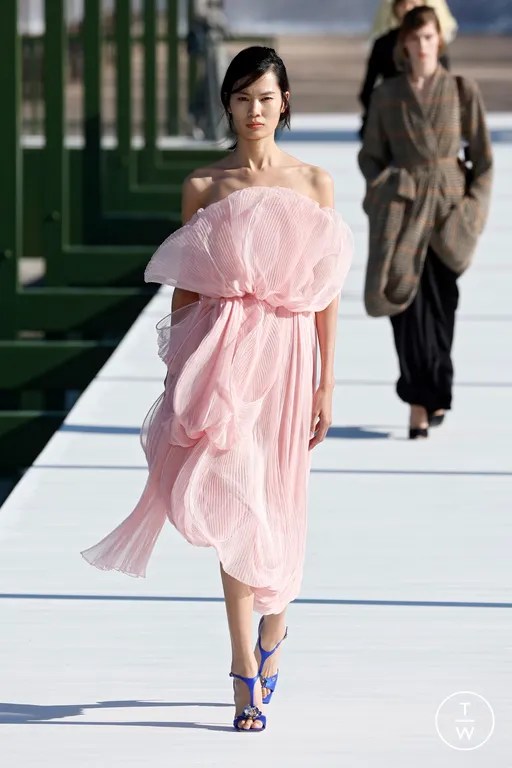
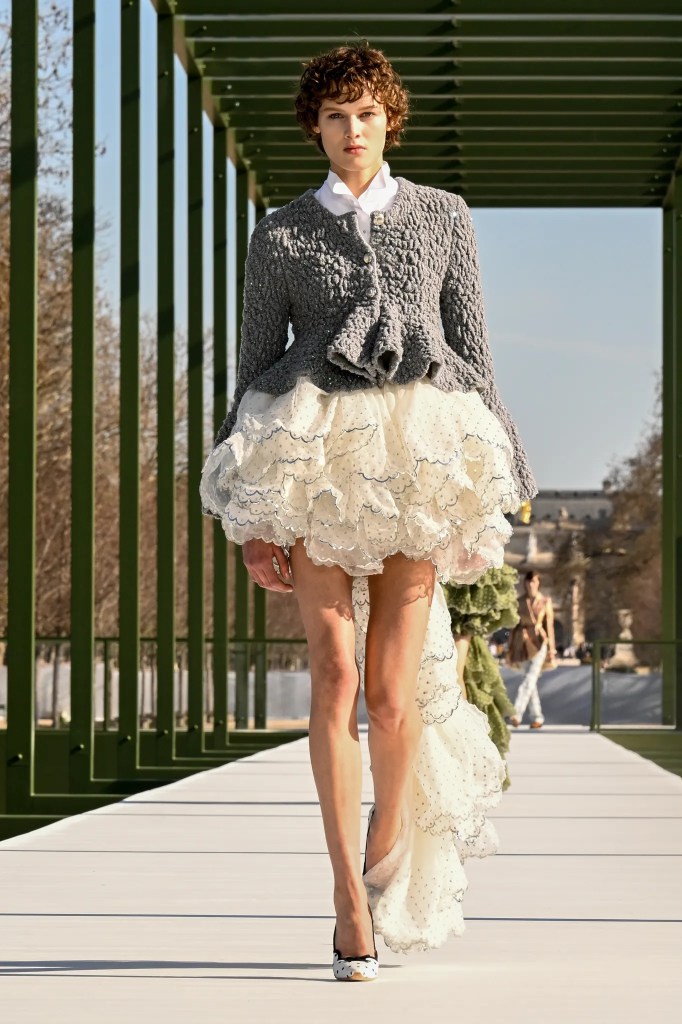
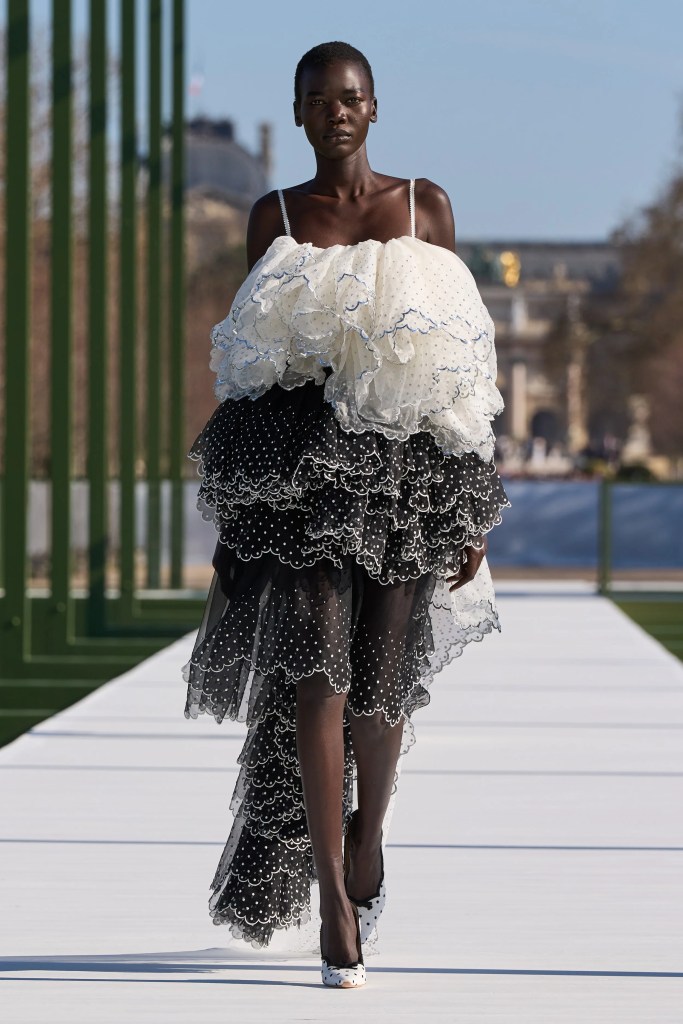
Even in its moments of escapism, Anderson’s Dior remained anchored in the Maison’s technical legacy, suggesting that fantasy in fashion emerges not from excess, but from careful reinterpretation of history, technique, and form. The collection reflected the timeless role of fashion in Parisian life — a theatre of elegance, observation, and subtle interaction.
Saint Laurent — Consistency as Strategy
Paris Fashion Week, March 3, 2026
Creative Director: Anthony Vaccarello
At Saint Laurent, structure functions almost as memory. For Winter 2026, Vaccarello revisits the house’s foundational grammar: rigorous tailoring, pronounced shoulders, and silhouettes that move fluidly between femininity and masculinity.
A disciplined procession of black suits — single and double-breasted — sets the rhythm of the collection, their strong shoulders tapering into defined waists. The show culminates in a renewed interpretation of Le Smoking, still nocturnal and insouciant, yet rendered with a quieter authority.
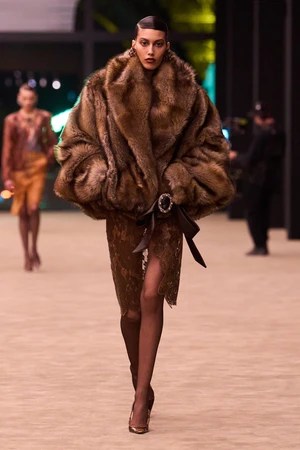
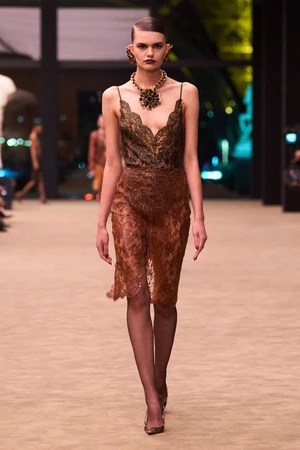
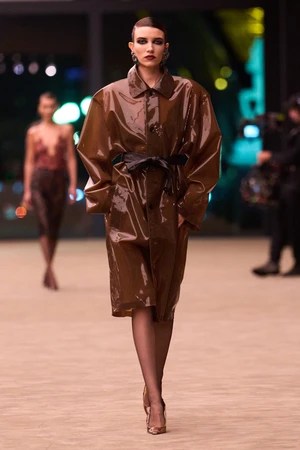
The house itself frames the collection around ideas of “precision, repetition and the architecture of the body”, as noted in the show’s description accompanying the runway video. In this context, repetition is not a lack of imagination but strategic consolidation: each look reinforces the Maison’s visual language.
In a season defined by aesthetic containment, Vaccarello’s approach reads less as nostalgia than as discipline. By reaffirming the house’s core vocabulary rather than chasing reinvention, the collection mirrors a broader shift across the runways: clarity, structure, and restraint have emerged as the defining gestures of this moment in fashion — a true reflection of the zeitgeist.
Tom Ford — Reinterpreted Seduction
Paris Fashion Week, March 4, 2026
Creative Director: Haider Ackermann
Tom Ford built his brand on glamour and overt sexuality; Ackermann, however, transforms seduction into a form of melancholic introspection. The AW26/27 collection explored the tension between desire and reflection: sensuality became slow, intellectual, and emotionally complex.
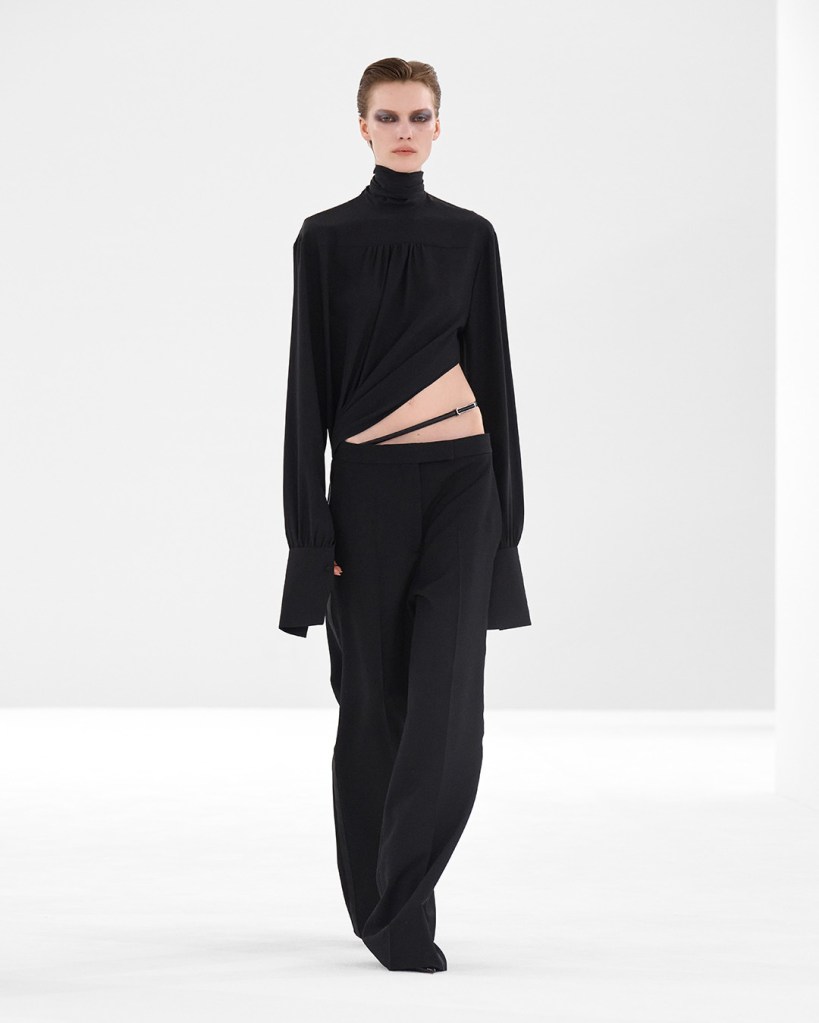
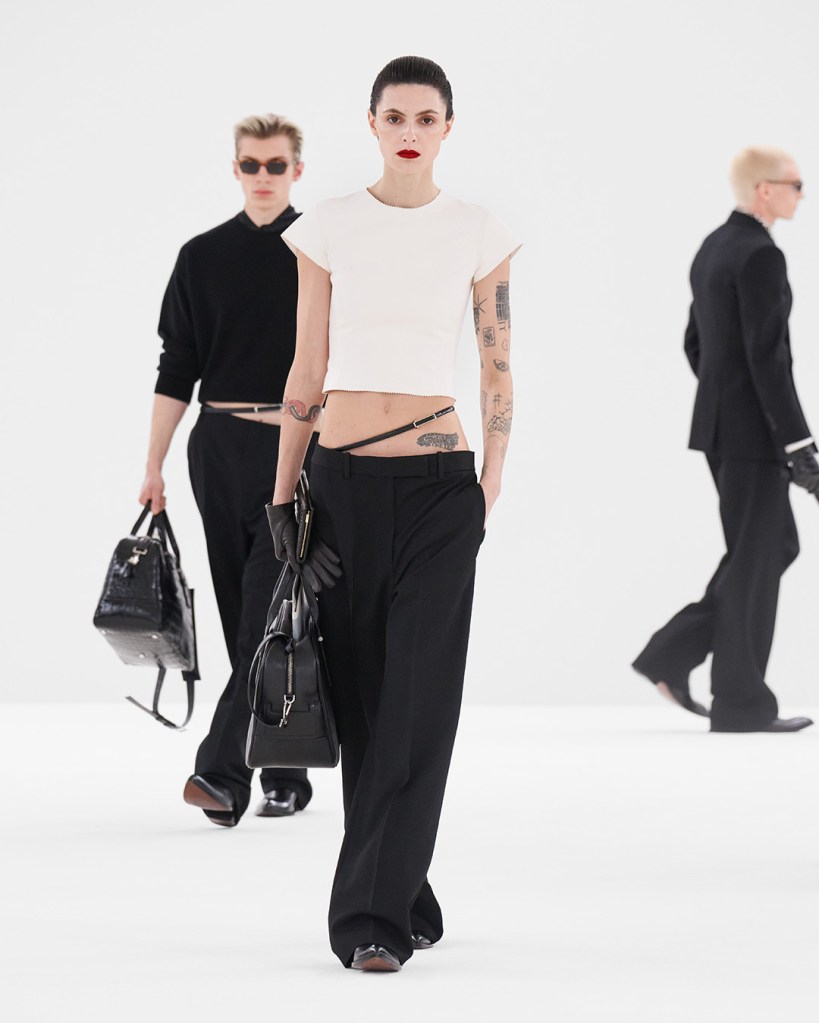
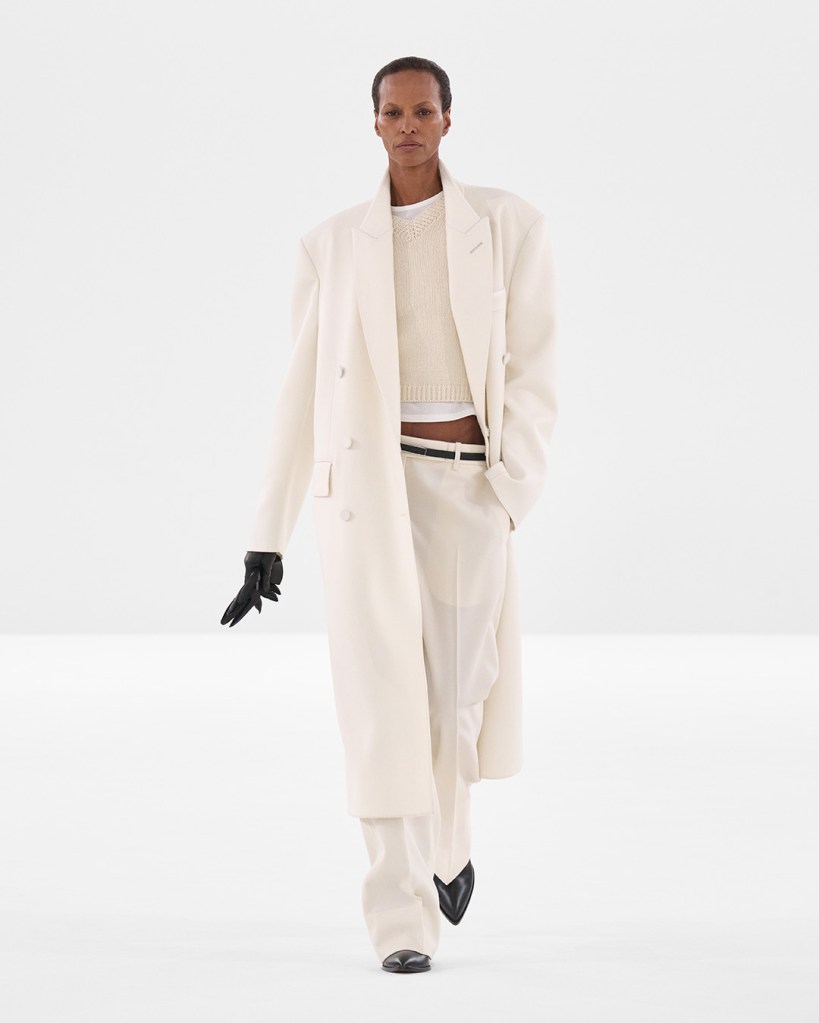
Set in a sterile white room with nods to American Psycho, the runway allowed models to move freely, creating an almost theatrical, introspective atmosphere. The soundtrack — Chopin: Nocturne No. 20 in C-Sharp Minor, Op. — added a calm, reflective mood, reinforcing the collection’s sense of measured elegance.
Ackermann explained:
“It’s about standing straight in life — facing everything that’s happening in the world. We live in a violent world, where everyone shouts and humility is scarce. The response is to return to the essentials: tailoring, rigor, and structure.”
In this way, Tom Ford interprets the zeitgeist differently from Saint Laurent: not through formal discipline, but via emotional restraint and reflection on the world, offering a subtler, more contemplative kind of elegance.
Alaïa — Precision, Luxury and Legacy
Paris Fashion Week, March 4, 2026
Creative Director: Pieter Mulier (final collection before leaving the Maison)
For his final show at Alaïa, Pieter Mulier delivered a collection that eschewed spectacle in favor of impeccable construction and sculpted silhouettes. ‘When you depart, you keep it calm, you talk about roots, you show what you have learned, very humbly,’ he said.
As Sarah Mower observed for Vogue Runway:
“It’s just really clothes for real people, not for an image. That’s what I told my team. Not to ‘impress.’ To reduce, reduce. No bags, no jewelry. Only beauty and clothes and a naked shoe. Because that’s what Azzedine was.”
This is not the most dazzling collection, but it is the most fitting: it reveals the essence of the Maison and lays the groundwork for its successor. Here, editing is luxury: every detail is deliberate, every silhouette meticulously shaped.
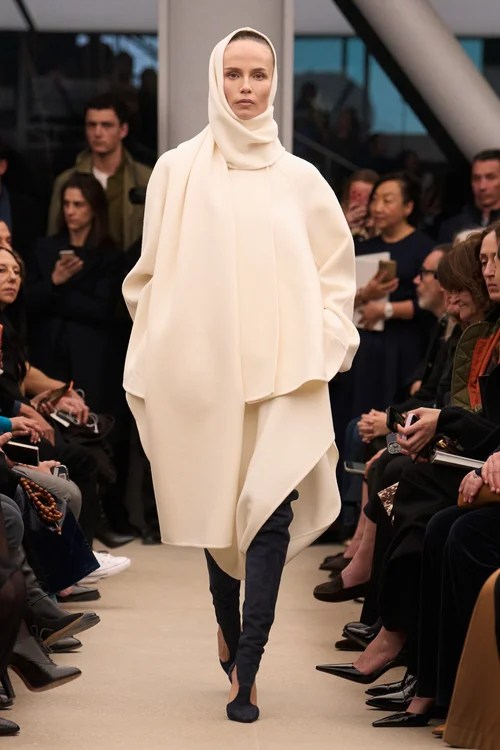
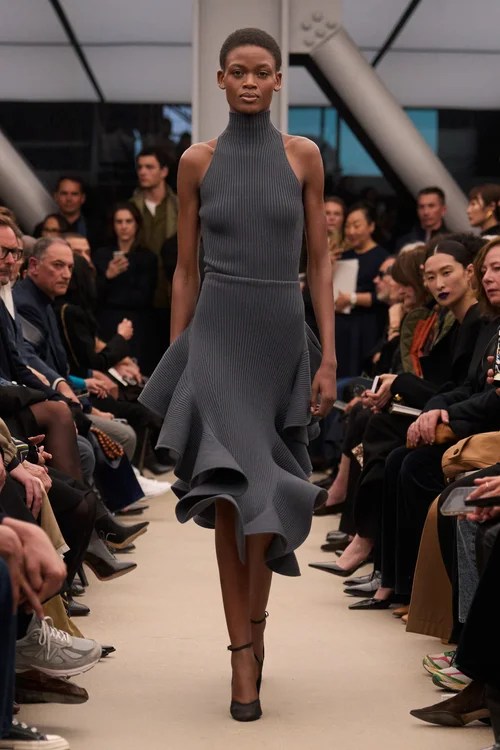
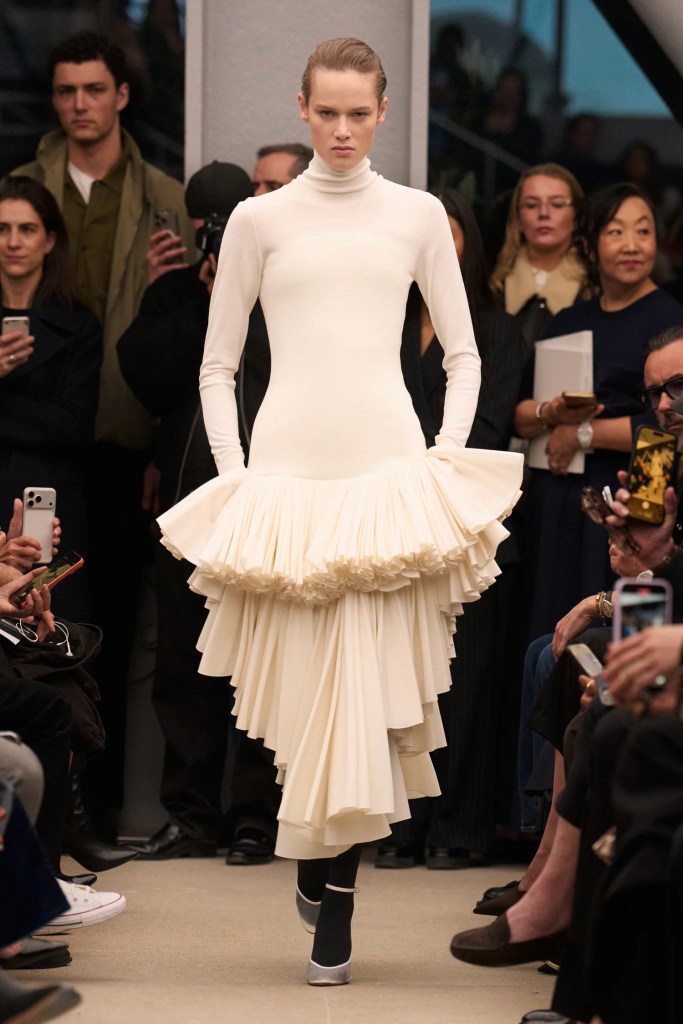
In a world marked by chaos and overstimulation, Mulier’s collection exemplifies fashion as both aesthetic discipline and cultural narrative. The focus on technique and refinement transforms restraint into a form of quiet power, reinforcing the season’s zeitgeist of measured elegance and thoughtful curation.
Vogue Runway highlighted how Alaïa’s precision and sculptural clarity allowed craftsmanship to speak through structure and proportion, an approach particularly resonant in a season less interested in spectacle and more invested in the intelligence of form. Coverage across major fashion media similarly observed that collections rooted in timeless construction and refined technique communicate with greater depth and cultural relevance than those chasing trends.
Givenchy — Identity and Reconstruction
Paris Fashion Week, March 6, 2026
Creative Director: Sarah Burton
“How can we put ourselves back together in the world we’re living in?” With this question, Burton framed her third runway collection for Givenchy, positioning the show as a meditation on resilience and identity.
Sarah Burton opened the collection with a question:
“How an we put ourselves back together in the world we’re living in?”
Constructed on the foundations of cut, tailoring, and silhouette that Burton established upon arriving at the house, the collection moved fluidly between strict sartorial precision and sensual, free-form drape. Sculptural shapes and painterly references evoked the Northern European old masters, while the atelier’s craftsmanship remained central: the heavy fall of duchesse satin capes, shredded floral evening dresses, and the distinctive headwraps created by Stephen Jones.
Jones described the pieces with characteristic simplicity: “These headwraps are the most natural hair coverings there are. Just a T-shirt. Just a twist. But it’s the right T-shirt, with the right twist.”
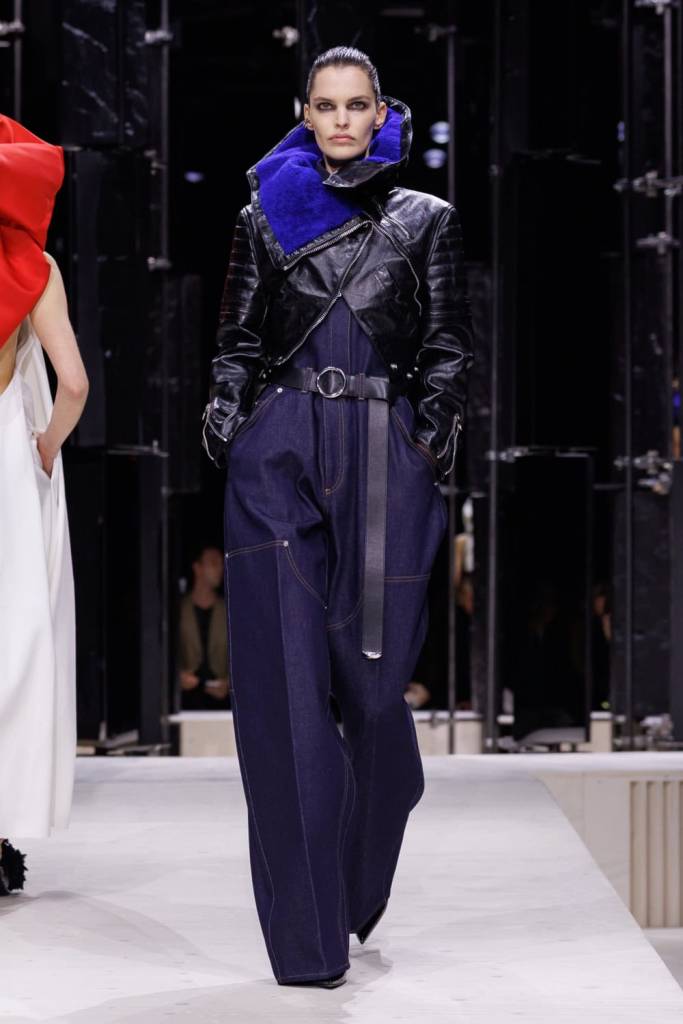
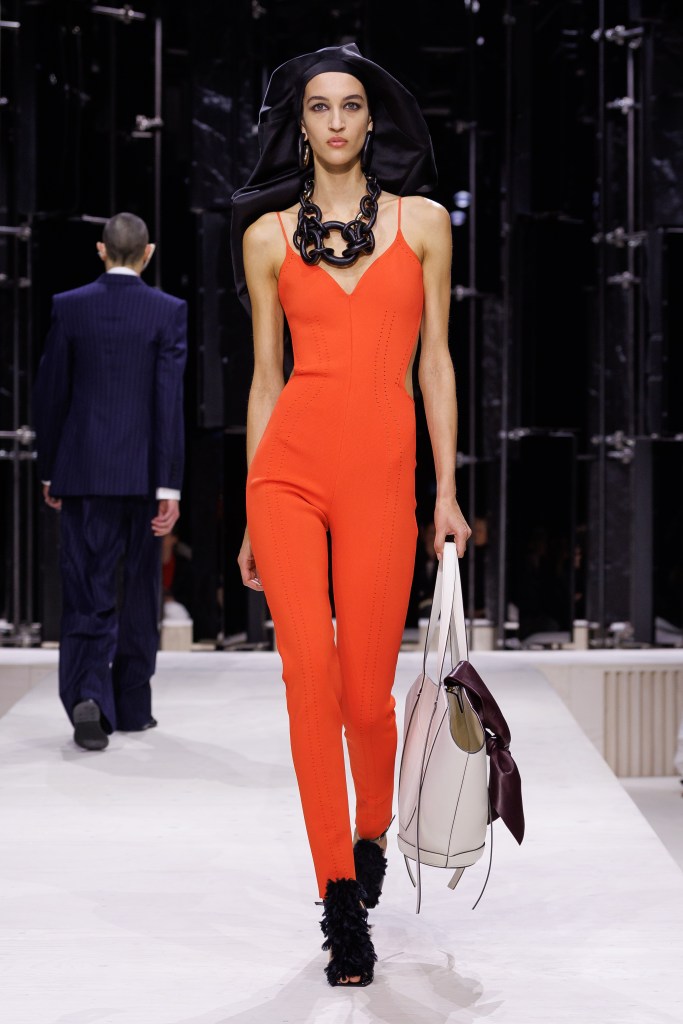
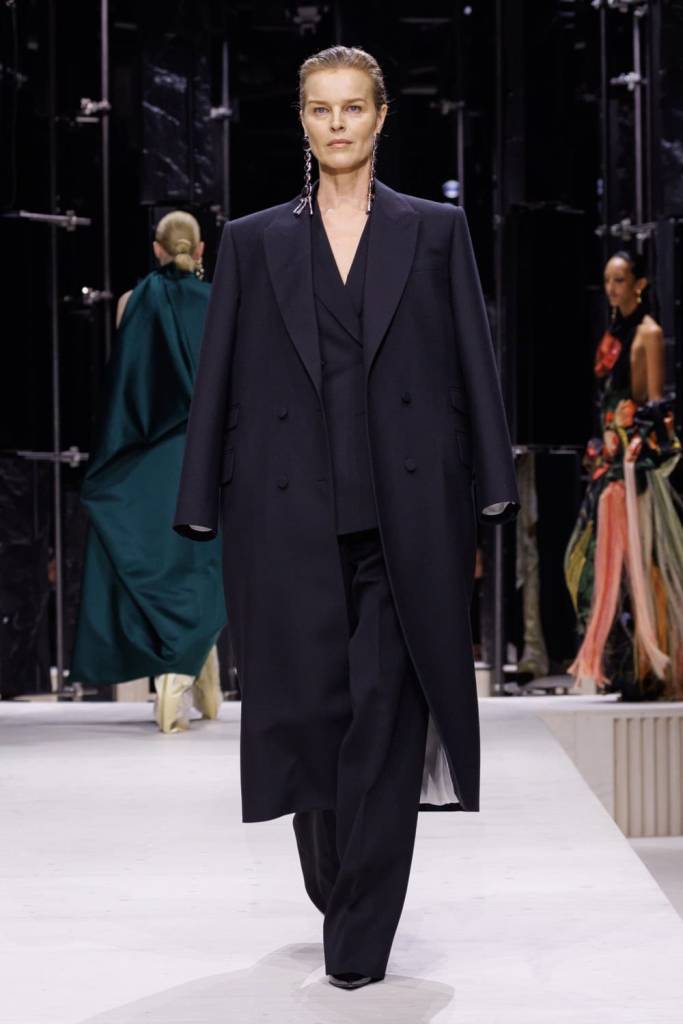
Critics observed that Burton’s Givenchy reflects a multiplicity of female identities rather than a single archetype. As Nicole Phelps wrote for Vogue Runway, the designer’s instinctive approach allows the house’s woman to emerge as “all sorts of women,” shaped by experience rather than fantasy.
In this sense, the collection acts as a mirror to the complexity of contemporary life. Between disciplined tailoring and expressive drape, Burton proposes fashion not as escape but as reconstruction — clothing that reflects how women navigate uncertainty, strength, and self-definition in the present moment.
Loewe — Craft with Humor
Paris Fashion Week, March 6, 2026
Creative Directors: Jack McCollough & Lazaro Hernandez
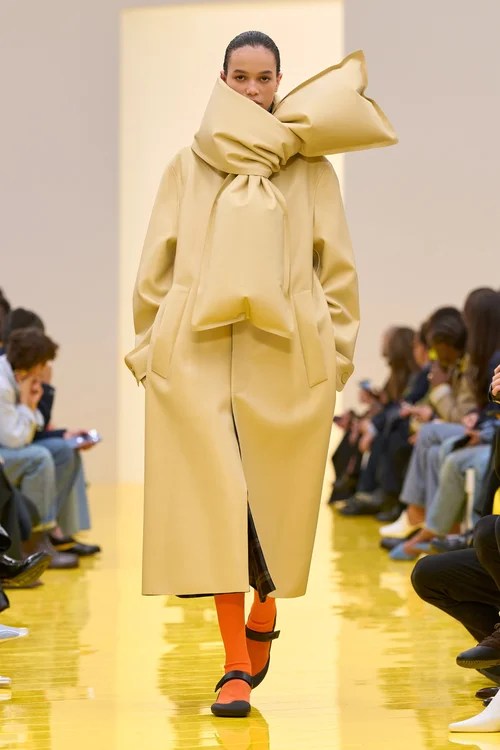
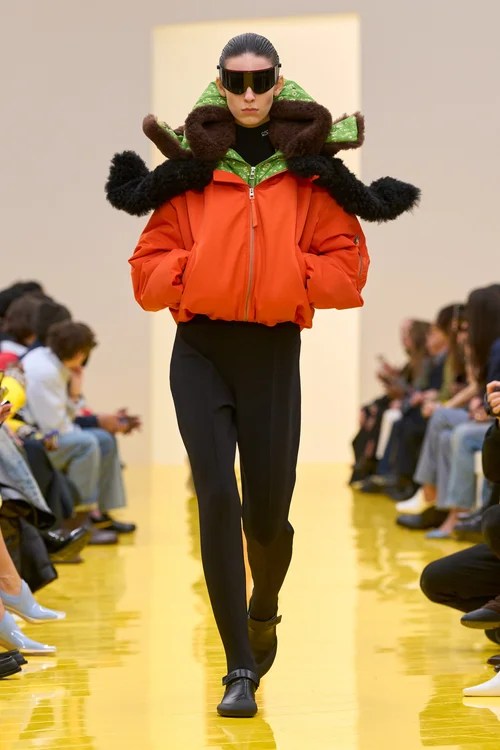
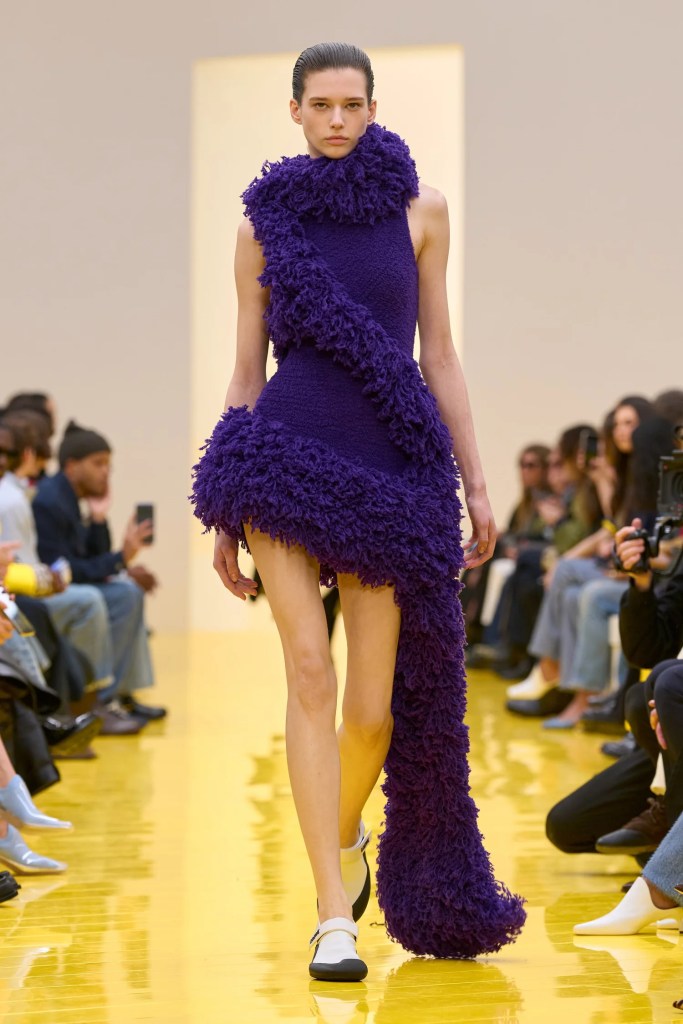
Loewe’s Fall/Winter 2026 collection demonstrated that restraint does not mean austerity. Inspired by a journey through Spain, McCollough and Hernandez translated their experiences into vibrant color blocks, geometric silhouettes, and a playful scenography featuring giant plush sculptures by Cosima von Bonin.
The collection fused tradition and innovation, humor and technical mastery, creating a vision that is both imaginative and meticulously crafted. Unlike the silent luxury of Alaïa or the formal discipline of Saint Laurent, Loewe responded to the zeitgeist with conceptual clarity and emotional creativity, showing that editorial restraint can coexist with joy, whimsy, and narrative richness.
As the Financial Times observed:
“In a season shaped by introspection and restraint, Loewe stood out by bringing emotional complexity and narrative depth to its clothes — a reminder that humour can be part of serious design.”
This perspective highlights how Loewe engages the contemporary cultural moment: while other houses explored discipline, minimalism, or introspection, Loewe balances craft with playfulness, suggesting that fashion can reflect emotional intelligence and creativity even in a restrained season. Humor, color, and narrative become tools to respond to a world of complexity and uncertainty, demonstrating that restraint in fashion does not exclude imagination, joy, or expressive depth.
P.S. The runway soundtrack — playful, vibrant, and perfectly timed to the collection’s rhythm — elevated the experience, making the humor, color, and sculptural forms even more engaging.
Balenciaga — Light Through Darkness
Paris Fashion Week, March 7, 2026
Creative Director: Pierpaolo Piccioli
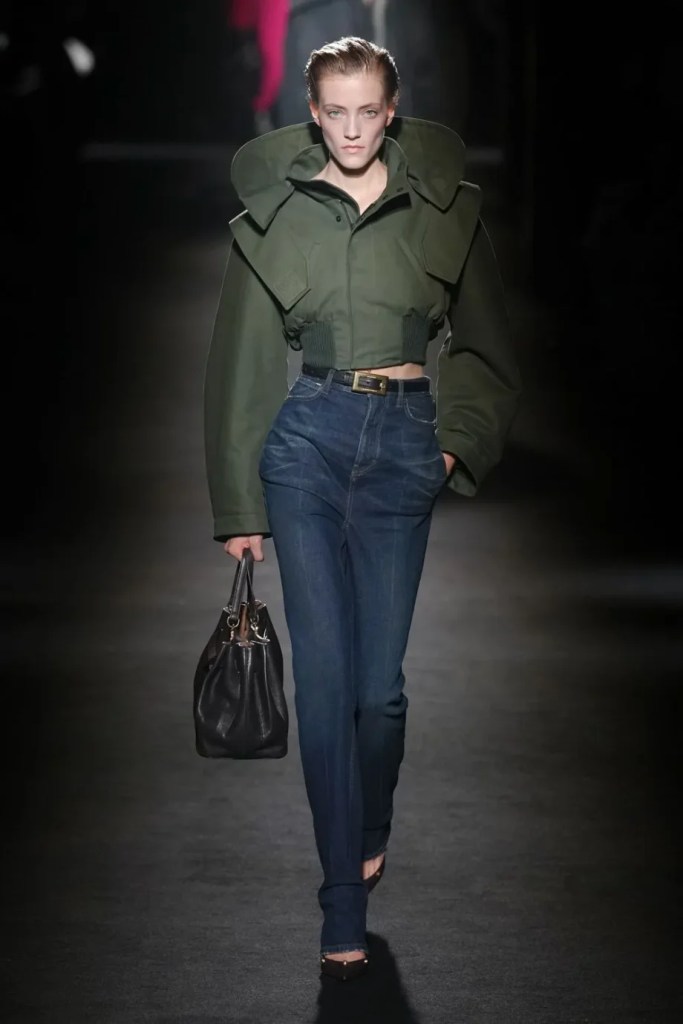
Balenciaga’s AW26/27 collection — titled ClairObscur — translated contemporary anxieties into a visual narrative built on contrasts of light and shadow, drawing on chiaroscuro painting and cinematic storytelling. The collaboration with Euphoria creator Sam Levinson extended beyond visuals, projecting fragments of the series’ upcoming season alongside runway imagery, reinforcing the show’s emotional intensity and narrative depth.
Critics noted how Piccioli’s second show for the house strikes a delicate balance between Balenciaga’s couture heritage and contemporary visual language, merging classical references with modern silhouettes and multimedia influence — a dialogue that aligns with the season’s broader emphasis on reflective form over mere spectacle.
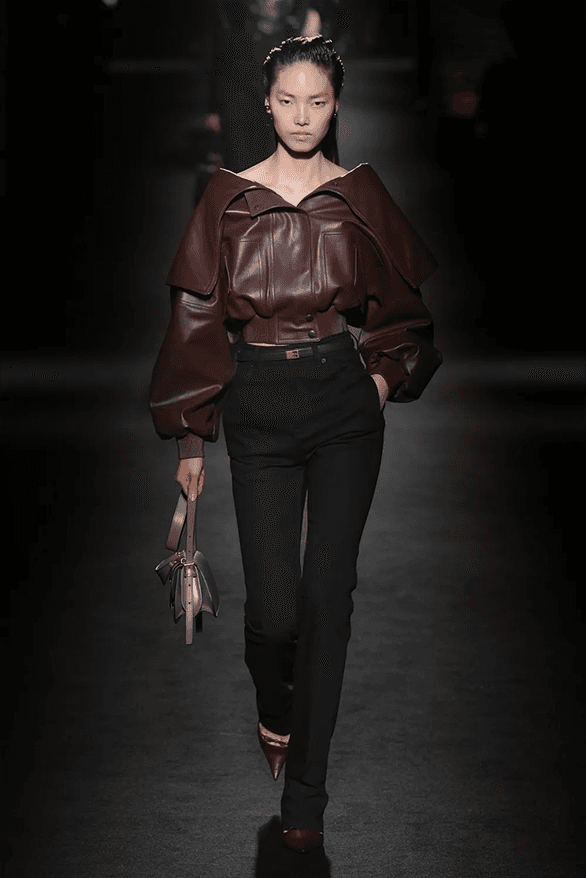
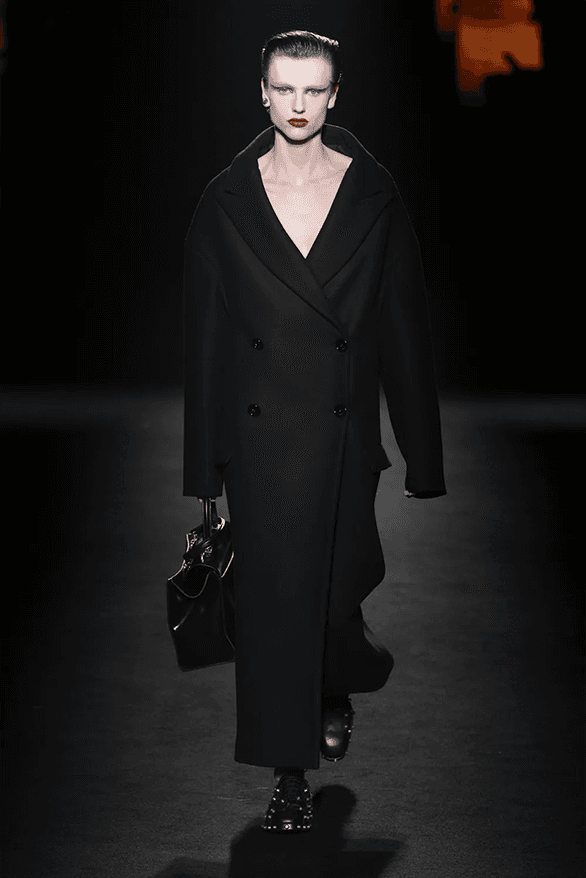
The soundtrack — including Labrinth’s cover of Smalltown Boy alongside music by Rosalía and Hans Zimmer — contributed significantly to the mood, creating a dramatic, modern soundscape that complemented the interplay of light and darkness on the runway and amplified the collection’s emotional resonance.
Taken together, Balenciaga’s AW26/27 reflects the zeitgeist of the season by channeling complex emotional states through considered contrasts, cinematic narrative, and thoughtful construction, demonstrating that fashion can articulate intensity and introspection as powerfully as tailoring and structure.precision, editing, and reflective aesthetics.
Celine — Instinct Over Concept
Paris Fashion Week, March 2026
Creative Director: Michael Rider
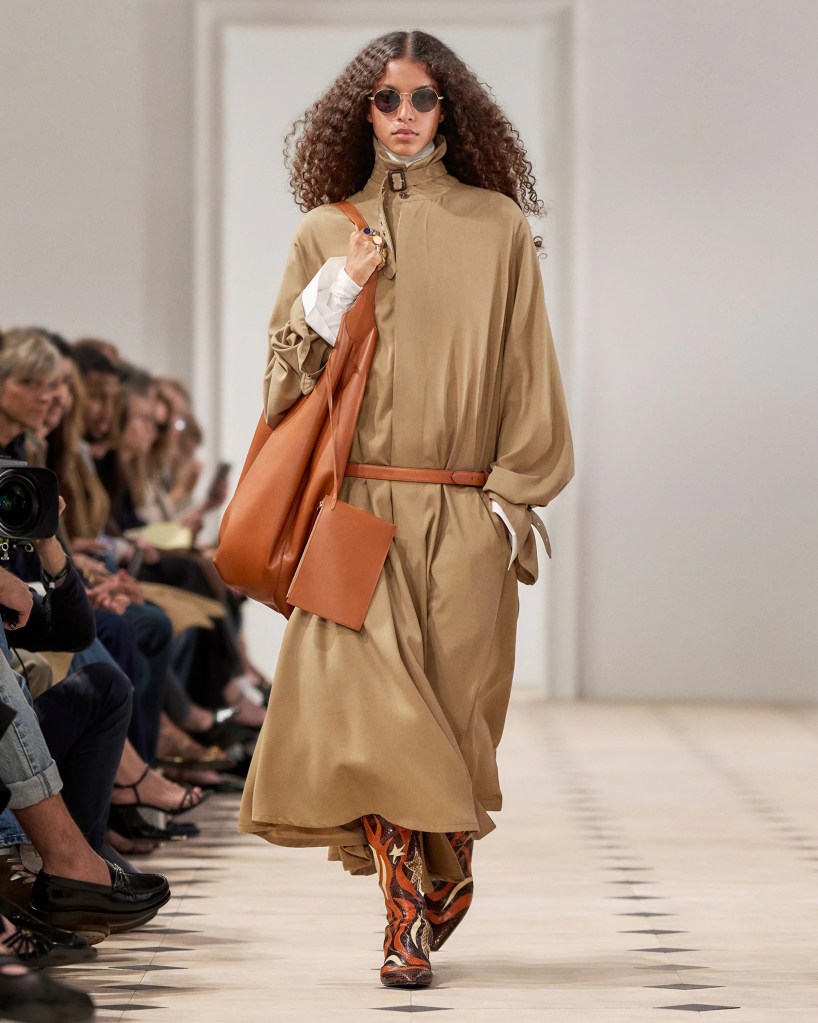
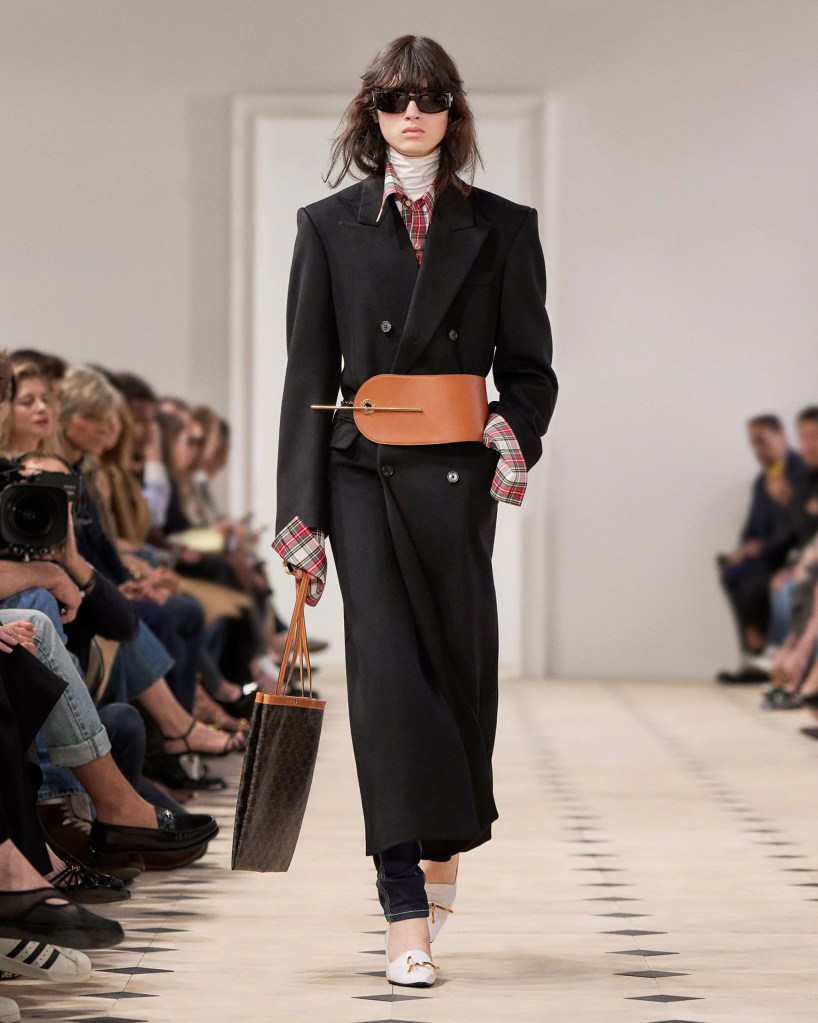
For Fall/Winter 2026, Celine offered a collection that felt deliberately grounded in reality. Presented at the Institut de France, the show marked a defining moment for Michael Rider as he further shaped his vision for the house — one that favors instinct, individuality, and clothes designed to live in the world rather than perform for it.
In the show notes, Rider set the tone with a clear statement of intent: “Intuition over strategy,” rejecting the idea of a rigid concept and instead allowing the collection to unfold through instinct and personal expression. The result was a wardrobe rooted in tailoring and precision — sharp blazers, elongated coats, and cropped kick-flare trousers — silhouettes that felt quietly authoritative rather than theatrical.
Critics noted that this approach echoed a broader mood across Paris Fashion Week. As the Associated Press observed, many designers this season focused on “realism and resilience rather than escapism.” In that context, Celine’s collection stood out for its refusal to rely on spectacle, instead presenting clothes that emphasize character and presence.
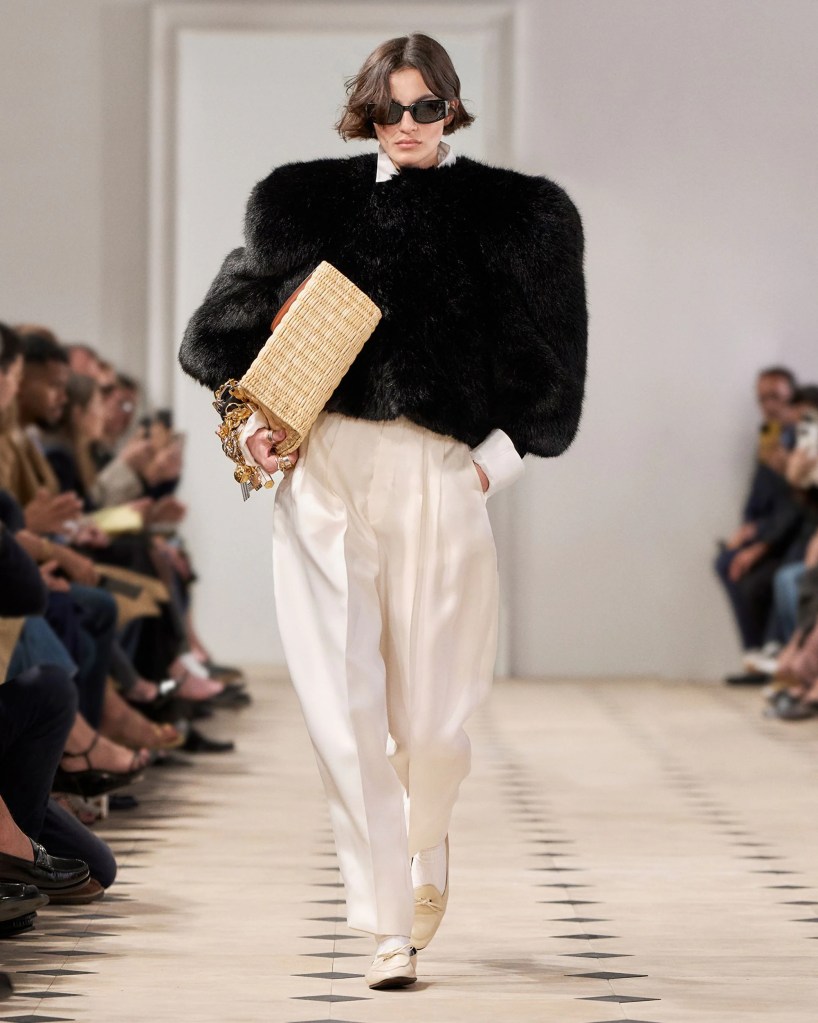
Fashion media also interpreted Rider’s direction as a deliberate move away from irony and conceptual excess. According to Dazed, the show reflected a fashion moment that is “sick of irony,” signaling a renewed interest in sincerity and authenticity within design.
This sincerity was visible in the details: jackets cut close to the body, structured tailoring softened by movement, and silhouettes that suggested confidence without overt statement-making. Rather than imposing a narrative, the collection allowed the wearer to define the story — a reminder that fashion’s power often lies not in spectacle, but in the quiet articulation of identity.
In a season shaped by global uncertainty, Celine’s Fall/Winter 2026 collection suggested that the most radical gesture may simply be returning to the fundamentals: instinct, craftsmanship, and the subtle authority of clothes designed to accompany real lives.
Hermès — Quiet Power
Paris Fashion Week, March 7, 2026
Creative Director: Nadège Vanhée-Cybulski
At Paris Fashion Week, Hermès delivered a collection rooted in what the house does best: precision, material excellence, and a restrained sensuality that speaks softly but carries authority. Presented in a twilight-inspired setting, the Fall/Winter 2026 show explored that liminal moment between light and shadow — when perception sharpens and silhouettes gain depth.
Leather dominated the runway — long coats, zip dresses, and equestrian-inspired pieces — reaffirming Hermès’ heritage while projecting a confident, grounded femininity. The collection balanced strength and fluidity, proving that luxury can be powerful without becoming theatrical.
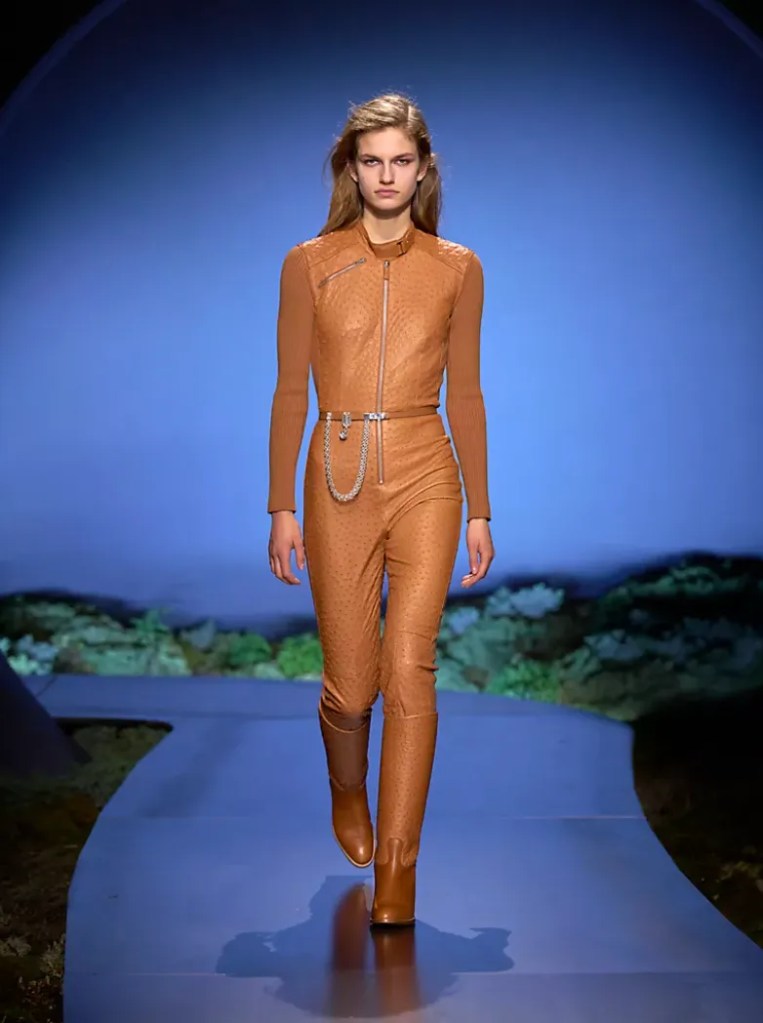
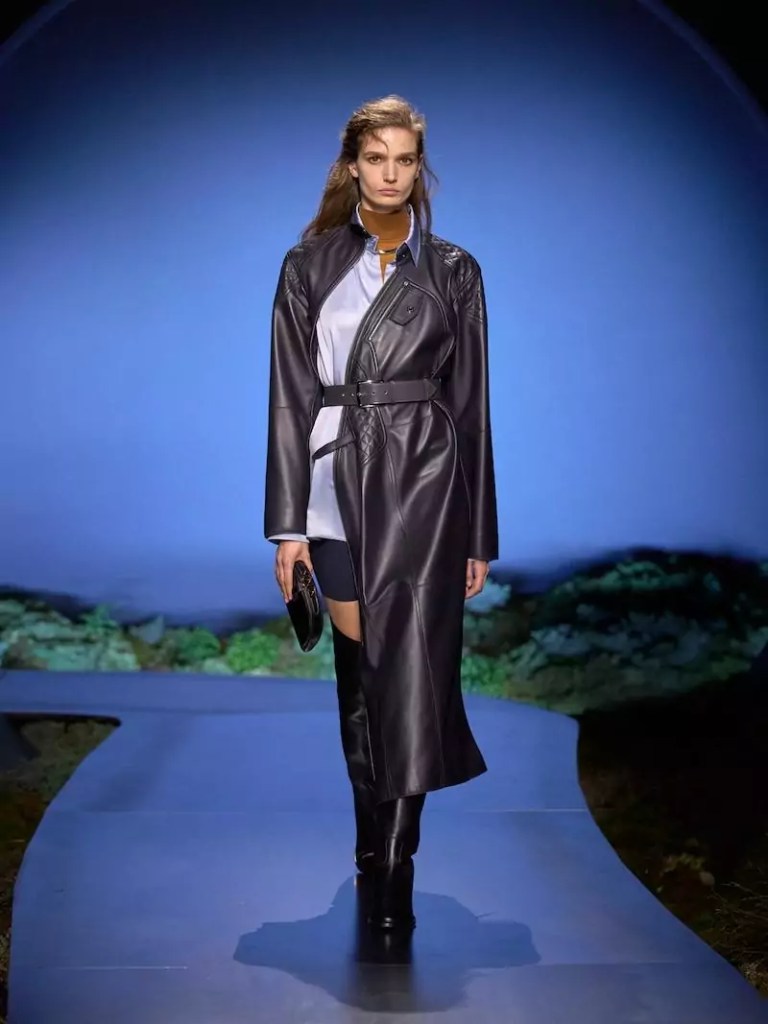
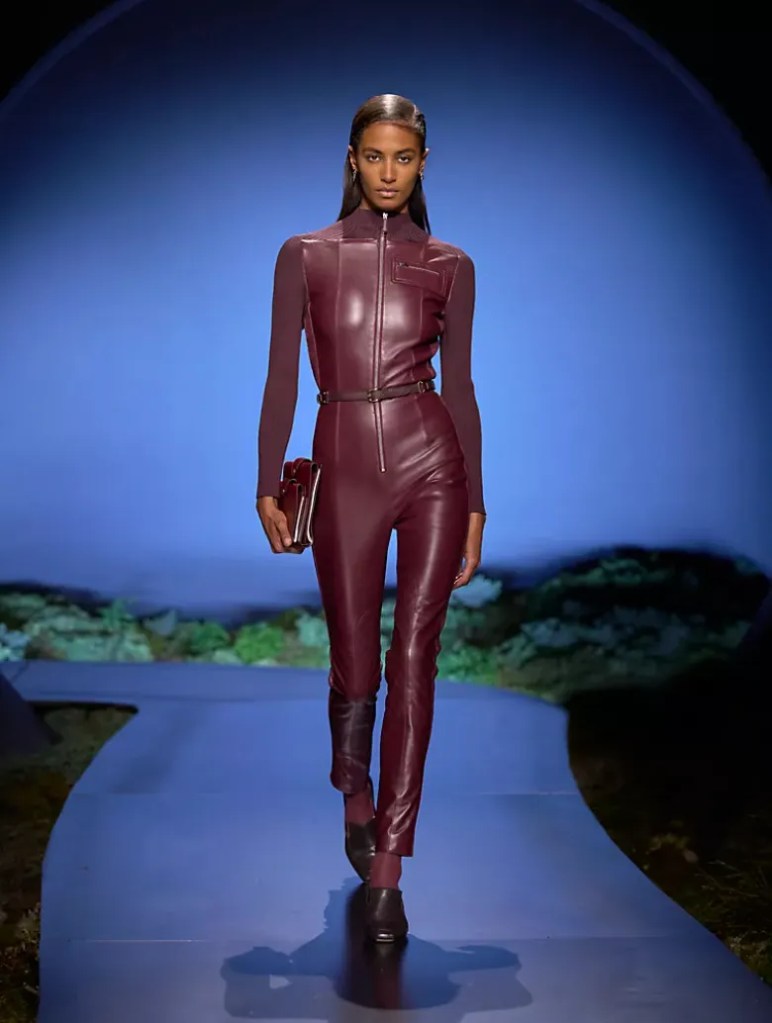
Critics noted how this approach resonated with the broader mood of the season. As Reuters observed, the show’s biker-inspired silhouettes and dusky palette reinforced Hermès’ signature blend of practicality and refinement. In a moment when fashion increasingly reflects global uncertainty, the collection suggested that restraint, craftsmanship, and tactile intimacy may be the most relevant response to the current zeitgeist.
Junya Watanabe — Fashion as Political Statement
Paris Fashion Week, March 7, 2026
Creative Director: Junya Watanabe
In this collection, Watanabe makes the link between fashion and politics explicit. Certain pieces carried direct messages — most notably “May peace prevail in the world” — making the global context literally part of the garments themselves.
As Luke Leitch wrote for Vogue Runway:
“Couture-silhouette gowns were made from items including emergency blankets, motorcyclist protective gear, and a sign reading ‘May peace prevail in the world.’”
Through these visual gestures, the runway becomes more than a display of design: it becomes a commentary on the present moment. The garments act as markers of contemporary anxieties and conflicts, demonstrating how fashion can operate as a barometer of the zeitgeist.
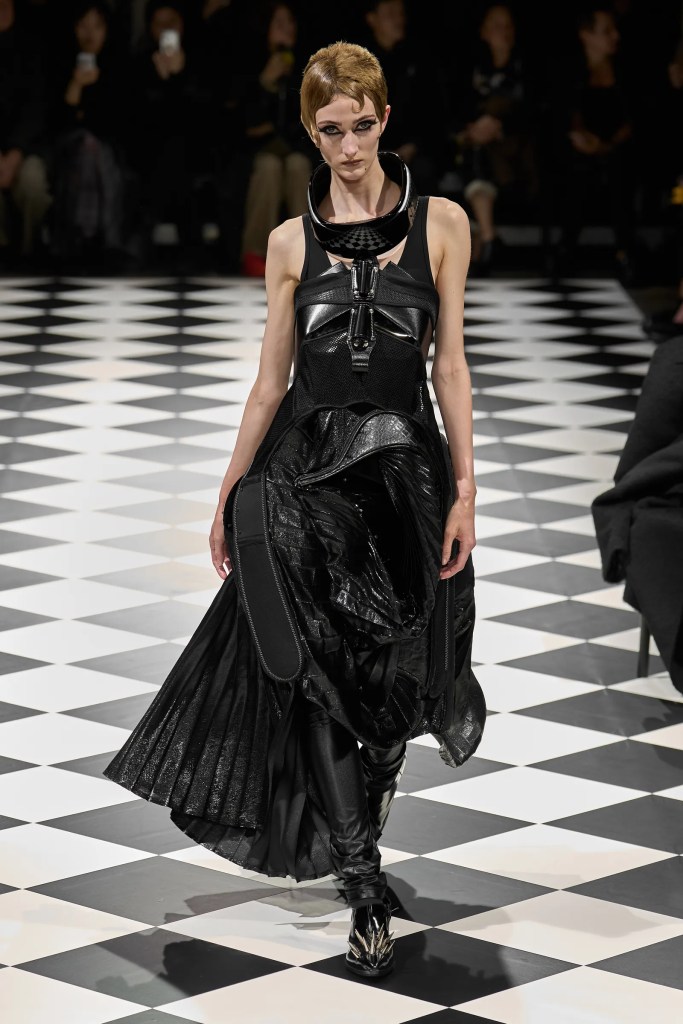
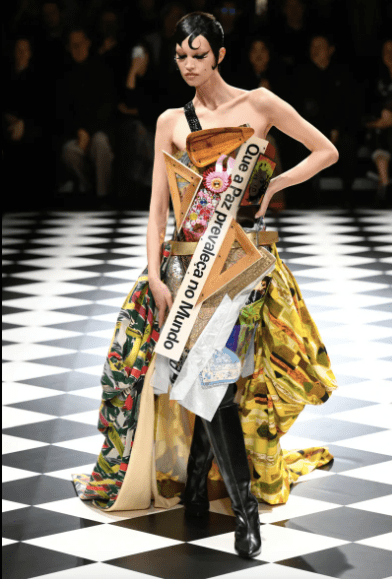
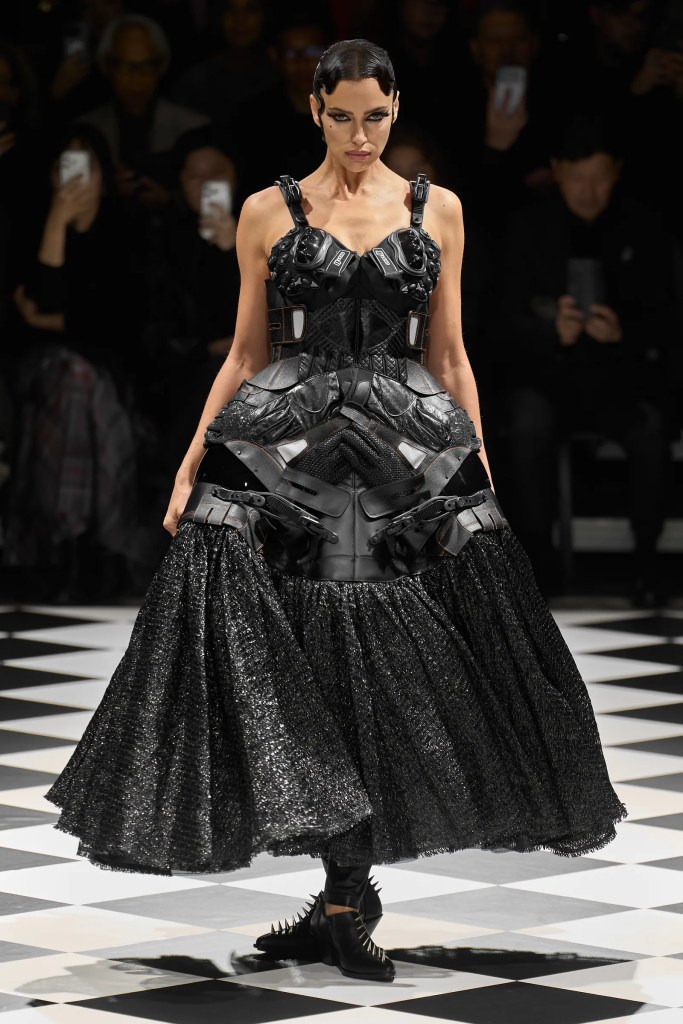
Watanabe balances design ingenuity with social consciousness, showing that even within the experimental language of avant-garde fashion, clothing can communicate ideas, values, and collective concerns.
McQueen — Beneath the Surface
Paris Fashion Week, March 2026
Creative Director: Seán McGirr
For Fall/Winter 2026, McQueen explored the fragile boundary between what is shown and what is felt. Presented during Paris Fashion Week, the collection unfolded as a meditation on identity, performance, and the tension between public image and private self.
The show notes described it as “a psychological tension between interiority and exteriority; performance and paranoia. Individualism under an unwavering gaze.”
That idea translated into clothes that blurred the line between intimacy and display. Lace gowns — traditionally confined to the bedroom — appeared as eveningwear, while velvet blazers were transformed into sculptural mini-dresses and floral wallpaper textures emerged as three-dimensional garments.
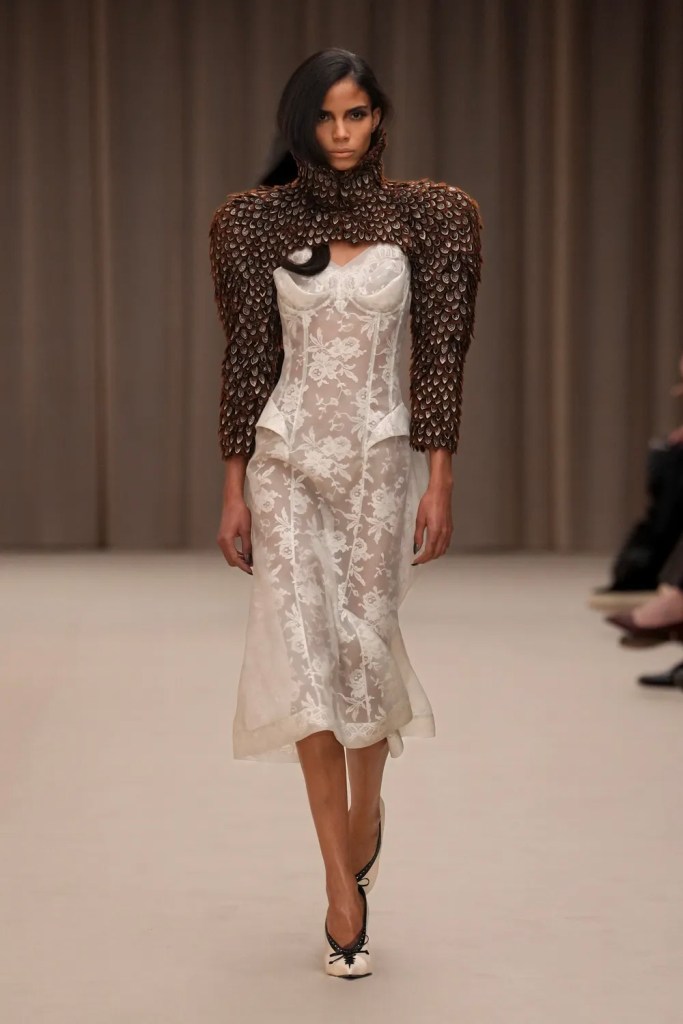
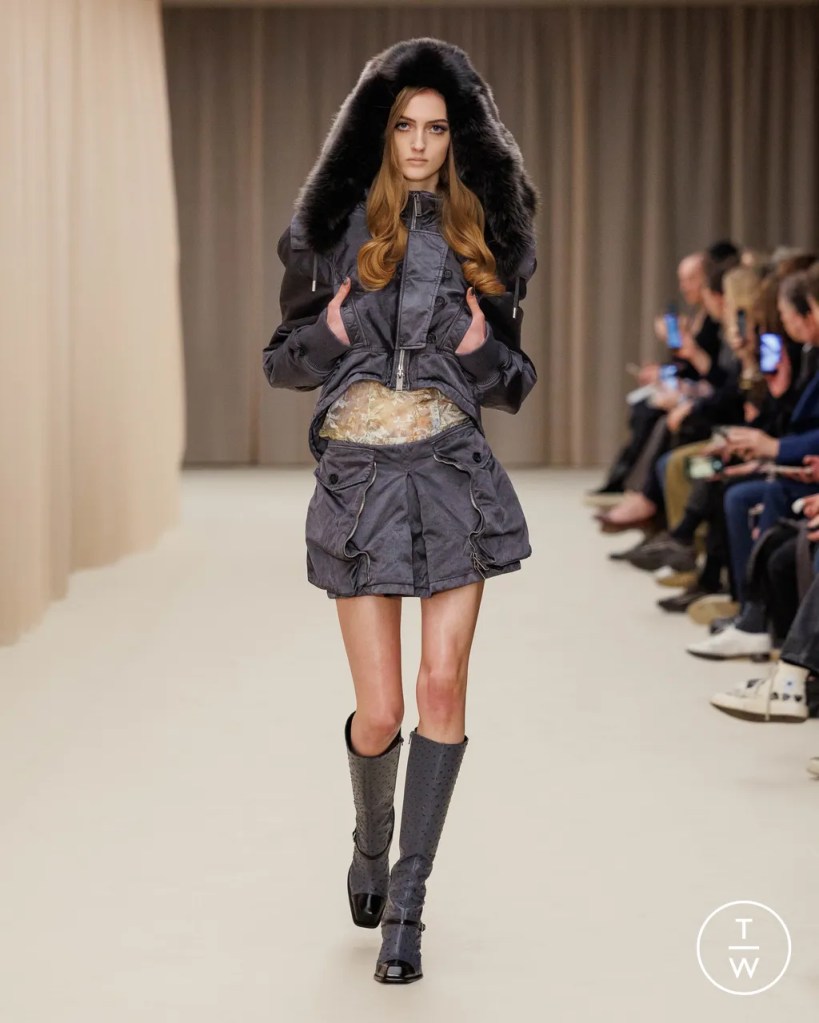
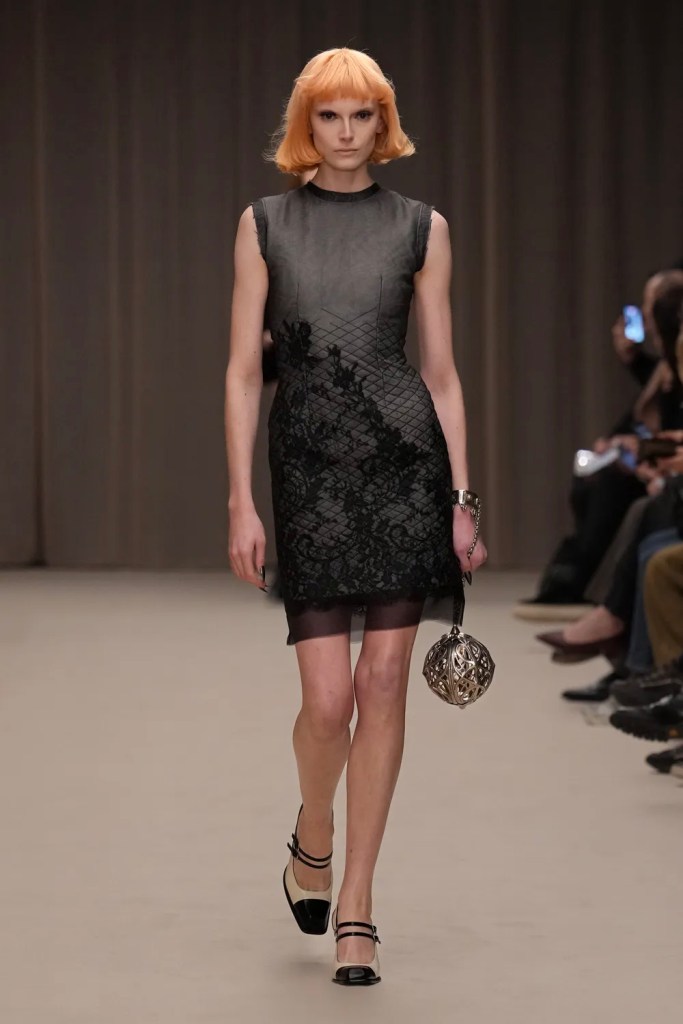
According to McGirr himself, the collection reflects the pressures of contemporary life:
“We’re always on; always curating, consuming, performing and being watched.”
In that sense, the collection captured a broader cultural mood. Rather than pure spectacle, McQueen proposed fashion as an exploration of psychological space — where surface elegance gives way to something more tactile, intimate, and human.
This tension between interior life and outward performance resonates strongly with the current zeitgeist. In an era defined by visibility, self-curation, and constant observation, McQueen suggests that the most compelling fashion may emerge not from spectacle, but from what lies beneath it.
Chanel — The Undisputed Show
Paris Fashion Week, March 9, 2026
Creative Director: Matthieu Blazy
I’m a Saint Laurent girl, but when it comes to reinventing brand codes, Blazy excelled in this Chanel collection — particularly through low-waisted silhouettes, a direct nod to Coco Chanel’s signature style, which subtly redefined the body’s line without overwhelming it. The show was a masterclass in revisiting heritage, merging visual storytelling, classic codes, and subtle innovation — an ideal example of editing as strategy rather than outright reinvention.
As noted on Chanel’s official site, the collection is “Day and night, simplicity and iridescence,” an ongoing conversation between Gabrielle Chanel and Matthieu Blazy that balances heritage with modernity.
Critics highlighted Blazy’s balance between tradition and contemporary expression. As reported by AP News, Blazy anchored the collection in a Gabrielle “Coco” Chanel quote — “We need dresses that crawl and dresses that fly” — symbolizing the tension between simplicity and grandeur, with dramatically dropped waistlines and a mix of tradition and surprise in silhouette and eveningwear. (apnews.com)
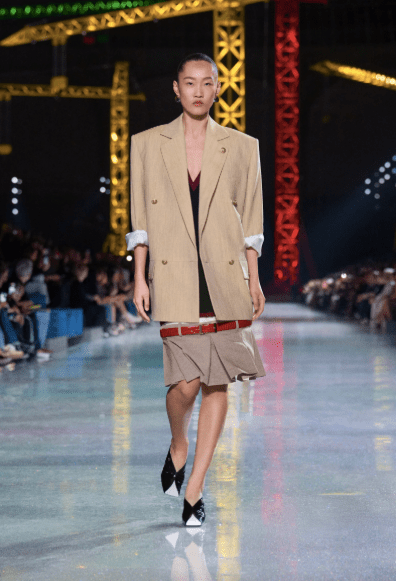
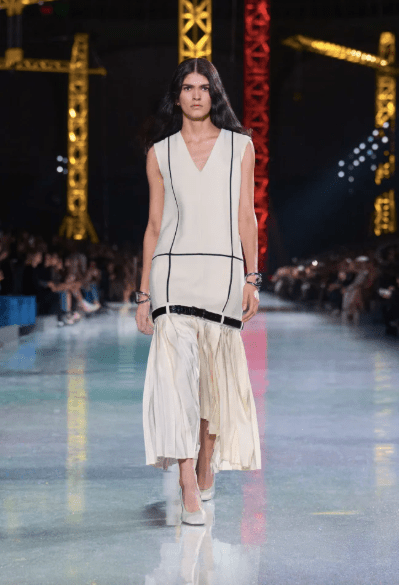
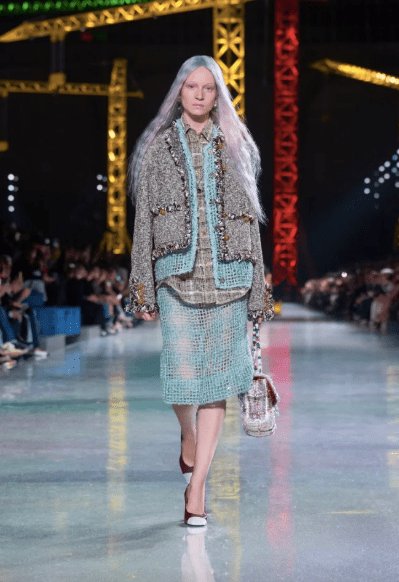
Similarly, fashion outlet Hypebae noted that taking the house’s signature codes and refining them for a new generation resulted in looks that were “quiet and unpretentious, but hugely impactful,” with weightless dresses and trompe l’oeil tweeds that speak as much to craftsmanship as to creative evolution. (hypebae.com)
The runway soundtrack was perfectly chosen to complement this vision. Even before Cesária Évora’s voice filled the room, I was already captivated; when it started echoing, goosebumps were inevitable. Every detail — from the models’ movement to the rhythm of the collection — felt meticulously orchestrated, showing how music and fashion merge to create a complete sensory experience.
Blazy demonstrates in his fourth show for Chanel that editing a Maison’s legacy — preserving its essence while introducing contemporary nuances, such as the revisited low waistline — can be just as powerful as a total reinvention. In a world that demands caution and reflection, Chanel AW26/27 shows that disciplined elegance and attention to detail function as both aesthetic and emotional responses to the zeitgeist.
Runway soundtrack: Cesária Évora (remix version) from the Chanel show.
In a world that demands caution and reflection, Chanel AW26/27 shows that disciplined elegance and attention to detail function as both aesthetic and emotional responses to the zeitgeist.
Through these visual gestures, the runway becomes more than a display of design: it becomes a commentary on the present moment. The garments act as markers of contemporary anxieties and conflicts, demonstrating how fashion can operate as a barometer of the zeitgeist.
Miu Miu — Intimacy and Humanity
Paris Fashion Week, March 10, 2026
Creative Director: Miuccia Prada
“Yourself is enough,” was the mantra Miuccia Prada repeated backstage after a deliberately pared-back Miu Miu show, anchored by taut washed leather coats and fur-collared pea coats, with small flashes of crystal here and there. Amid the “bigness of the world,” the designer emphasized the value of our bodies and minds — small but strong — and the importance of keeping our humanity close.
Miuccia Prada reflected:
“Basically, it was the idea of a small human body compared with the vastness of the world. You, as a human person, you are enough. You don’t need anything, because you have yourself. You have your mind. That should be enough against whatever happens.”
The AW26/27 collection embodied this philosophy. Slim coats with high belts, worn down to a natural sheen, were paired with flared pants that dragged through the soil, while beefy leather coats with shaggy hems and filmy cropped windbreakers lined with shearling conveyed a refined DIY aesthetic, where wear and texture tell a story of intimacy and reality.
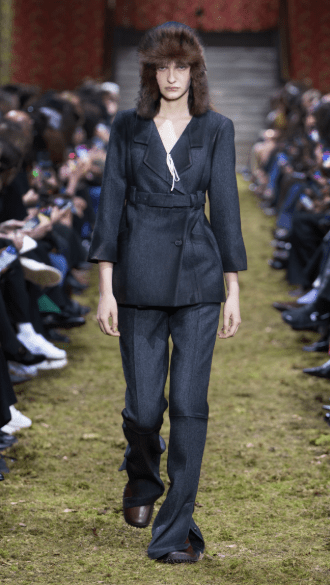
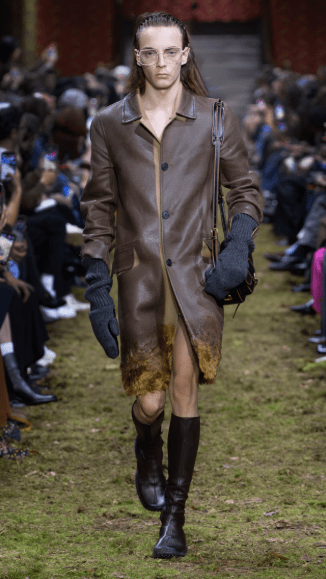
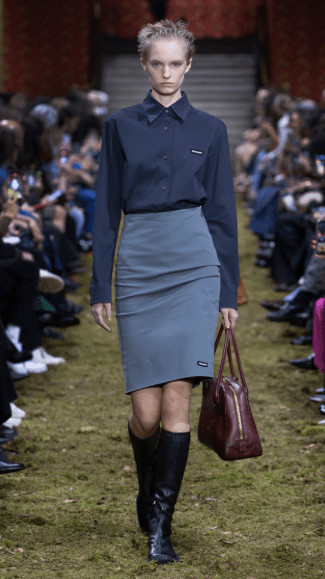
In this context, fashion becomes an existential refuge: it does not seek scandal or ostentation, but reinforces the idea that, even amidst global instability, the individual and introspection are sufficient. The collection demonstrates that restraint can be powerful, transforming simplicity and introspection into expressions of emotional and aesthetic resilience.
The result is a narrative of intimacy, protection, and presence. M. Prada sees in worn fabrics and tailored silhouettes a gentleness and closeness that reflect the contemporary need to care for body and mind: “[I feel] actually reinforced by the idea that still, we exist. We are there.”
Miu Miu AW26/27 thus translates the current zeitgeist: rather than grand spectacle, small gestures of care and presence become fashion’s most potent form, a creative editing that communicates humanity in turbulent times.
Decoding Fashion
How to Read a Runway — A Pedagogical Guide
To observe critically, we propose five essential points:
- First look — sets the tone and narrative
- Collection rhythm — cadence and development
- Dominant silhouette — identity and house codes
- Set design and casting — context and intention
- Final look — synthesis of the collection’s message
A Season of Introspection
Across Paris Fashion Week Fall/Winter 2026, a subtle yet unmistakable shift emerged. While fashion has often thrived on spectacle, this season suggested a quieter, more introspective response to the world we inhabit.
At Saint Laurent, sharp tailoring and controlled sensuality emphasized precision over excess. Alaïa reduced the runway to its essence — “only beauty and clothes,” as Pieter Mulier described — stripping away accessories to focus entirely on the body and the garment.
Celine proposed instinct over concept under Michael Rider, while Hermès reaffirmed the power of craftsmanship and tactile sensuality through the precise language of leather. At Miu Miu, Miuccia Prada reduced the message even further: “You are enough.”
Elsewhere, designers explored the psychological dimensions of contemporary life. McQueen examined the tension between inner life and outward performance, while collections at Givenchy and Balenciaga transformed uncertainty and emotional turbulence into visual narratives.
Loewe demonstrated that restraint does not equate to austerity, creating garments that were both imaginative and meticulously crafted.
Together, these collections reveal a fashion moment defined less by grand gestures than by subtle recalibration. In a world marked by instability, designers appear increasingly drawn to restraint, authenticity, and the human body itself as the ultimate point of reference.
If previous seasons celebrated spectacle, Fall/Winter 2026 suggests something else entirely: a return to essence — where craft, identity, and emotion quietly shape the future of fashion.


Leave a Reply