What’s wrong with you, people?
(I know. THE WEEKEND wasn’t published on the weekend. Turns out being the editor, writer, art director, designer and social media manager of your own space is, apparently, not enough.)
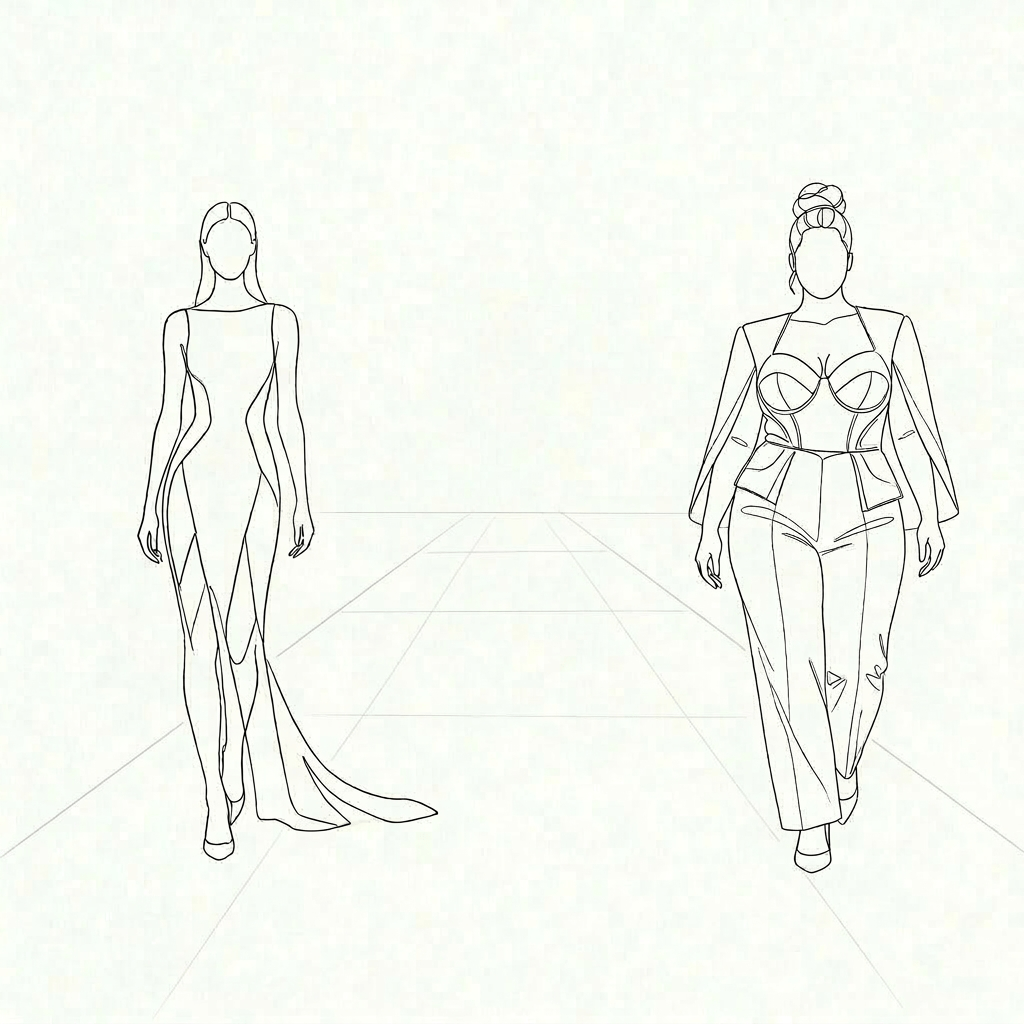
For the past few years, the fashion industry — alongside social media, celebrities and virtually every self-appointed digital activist — has insisted on feeding us the same narrative: body acceptance. Suddenly, every body was beautiful, every shape deserved celebration and any attempt to introduce nuance into the conversation immediately became problematic. Magazine covers transformed themselves into moral statements, fashion campaigns into social manifestos and the word “skinny” almost became taboo. At some point, it felt as though thinness itself had become offensive.
And yet, here we are.
Only a couple of years later, Ozempic has entered the chat and the collective discourse has changed almost overnight. The same industry that aggressively pushed body positivity now seems hypnotised by shrinking bodies again. Celebrities who once positioned themselves as advocates for self-love suddenly appear dramatically thinner, accompanied by suspiciously vague explanations involving “wellness”, “clean eating” and Pilates. Social media — naturally — follows. Because social media always follows.
The same industry that aggressively pushed body positivity now seems hypnotised by shrinking bodies again.
Which raises the obvious question: was any of it ever real?
Because true acceptance does not disappear the moment a trend changes. Principles do not evaporate because fashion decided heroin chic was making a comeback. And yet, that is exactly what seems to be happening. Again.
A few years ago, I wrote for Vogue Portugal about this very tension in the way we speak about bodies — long before it became a mainstream conversation. At the time, I was already questioning how easily the discourse was slipping between empowerment and distortion, between acceptance and ideology, without ever really stopping in the middle where reality tends to live.
I wrote then that:
“There is a fine line between acceptance and glorification.”
A line that, in theory, should have been obvious. In practice, it became almost impossible to maintain.
And in the same text, I pointed out something that already felt uncomfortable even then, precisely because it refused to align neatly with either extreme:
“Being overweight should not be promoted as healthy in the same way extreme thinness should not.”
It was never about judgement. It was about the increasingly dangerous collapse of nuance — the idea that in order to defend one narrative, we had to fully erase the other.
Later, when the Ozempic phenomenon began to quietly reshape the cultural landscape, I wrote again on the subject for Vogue Portugal, this time observing how quickly the same system that had celebrated body positivity was ready to pivot the moment a pharmaceutical shortcut to thinness became culturally available.
At the time, I wrote:
“The cult of the skeletal body has returned, but it is precisely to those who wish to be (even) thinner that Ozempic is not intended.”
And what felt striking then — and even more now — is not the substance of the shift itself, but the speed and ease with which it happened. As if the previous discourse had never existed. As if no one had ever been so confident about the language of acceptance.
Because somewhere along the way, the conversation stopped being about balance, health or even genuine self-esteem and became entirely dictated by aesthetics, trends and social validation.
And perhaps that is the most unsettling part of all: the frightening ease with which people abandon convictions in favour of whatever the current cultural mood happens to be.
One year, curves are empowerment. The next, thinness is aspirational again. One year, people preach self-love. The next, they are spending fortunes on weekly injections designed to make them smaller. In Portugal alone, we are currently spending around 613,000 euros a day on weight-loss injectables — over 130 million euros a year — because, apparently, body acceptance had a budget limit and a very short shelf life.
In Portugal alone, we are currently spending around 613,000 euros a day on weight-loss injectables — over 130 million euros a year.
Not because society suddenly became deeply concerned about public health, but because culturally, thinness has returned to being desirable again.
That distinction matters.
Because this is not really about health. If it were, the conversation would look entirely different. This is about trends. About aesthetics. About belonging. About people desperately trying to align themselves with whichever image society currently rewards most.
And celebrities — unsurprisingly — continue to be among the worst offenders. The same public figures who spent years preaching acceptance now quietly participate in the exact same beauty standards they previously claimed to reject. And perhaps what irritates me most is not even the contradiction itself, but the dishonesty surrounding it. The performance. The refusal to admit that most of these narratives were never rooted in conviction to begin with.
They were rooted in relevance.
Because if tomorrow fashion decides that curves are desirable again, everyone will suddenly rediscover body positivity. The think pieces will return. The empowerment campaigns will magically reappear. The same people currently romanticising extreme thinness will once again speak the language of self-love and inclusivity as though none of this ever happened.
And perhaps the most striking examples are not even the obvious ones, but the unexpected ones — figures like Demi Moore, whose symbolic positioning around empowerment, aging and female agency only makes the current aesthetic dissonance more visible, not less.
Which leaves us with one unavoidable conclusion: most people do not actually think for themselves anymore. They follow aesthetics the same way previous generations followed religion — blindly, emotionally and in desperate need of belonging.
And honestly?
What’s wrong with you, guys?


Leave a Reply