On a generation that learned to adapt before it learned to rest.
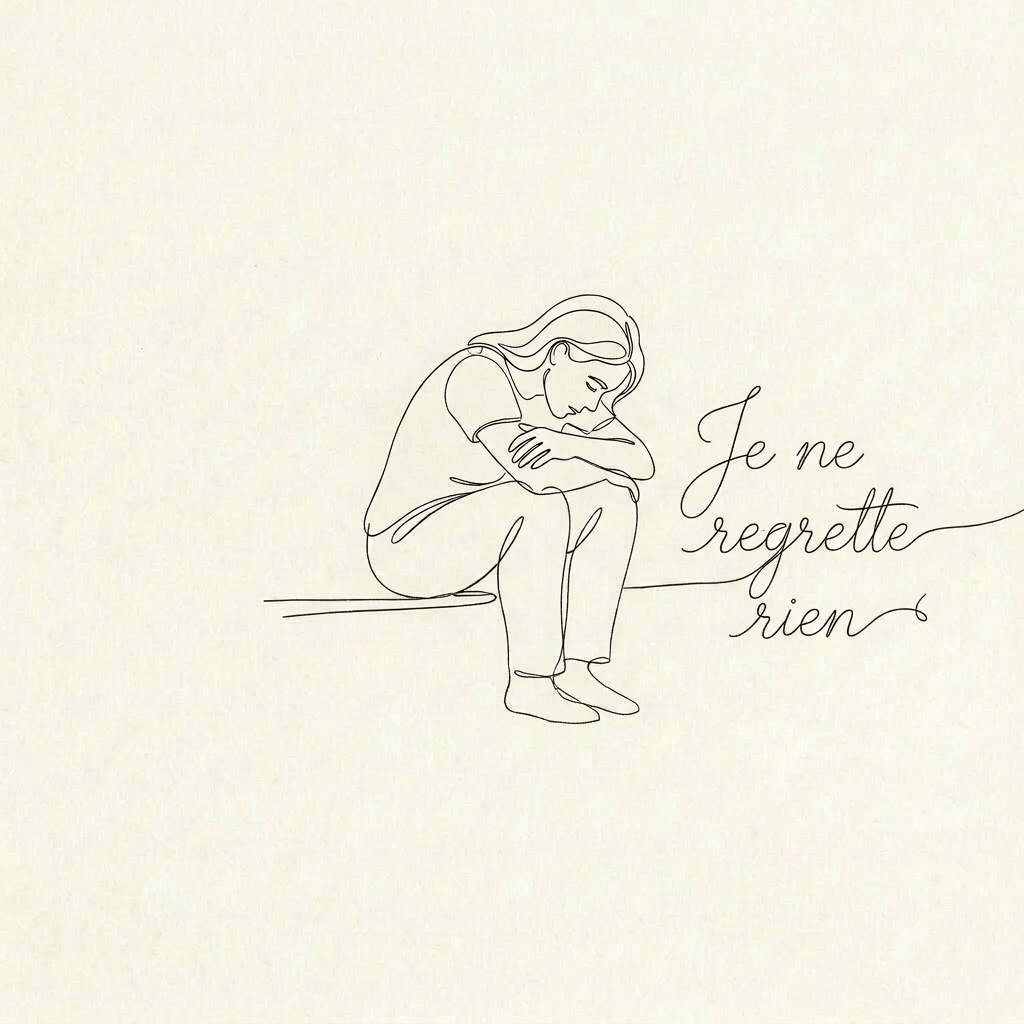
If I knew at 20 what I know today, there are certain things I would have done differently. Despite the tattoo I proudly carry on the inside of my arm — je ne regrette rien — I now realise there are, in fact, decisions I would have made otherwise. Not necessarily out of pure regret, but because time offers us a kind of lucidity that youth simply cannot possess.
I’ve had an extraordinarily rich life in experiences. Many wonderful. Others profoundly difficult — emotionally violent, even. But there has always been something in me drawn to unrest, intensity, strong emotions, and the almost romantic idea of living everything fully and absolutely. And there is something wonderfully intoxicating about that when you are young. There is an almost cinematic beauty to that way of moving through life, to the belief that feeling everything intensely is synonymous with truly living. The problem is that some of those experiences eventually demand payment later on.
At the same time, it would be intellectually dishonest to pretend that many of those very experiences were not precisely what shaped me. What made me who I am. And perhaps life is exactly that: a continuous process of reconstruction, where we lose parts of ourselves in order to gain others — not necessarily better or worse, simply different.
Professionally, especially, there are things I now see with an entirely different clarity. I never imagined reaching my forties and finding a landscape so unstable, so emotionally exhausting, and so structurally fragile — not only for myself, but for so many people of my generation. When I started my internship at Ogilvy & Mather, I was only 22 years old and holding a newborn son in my arms. I look back at that version of myself with a certain tenderness: insecure, filled with ambition and hope all at once, convinced I was standing at the beginning of a solid and promising journey.
And for a very long time, we all believed that. That working hard would be enough. That stability would eventually come. That there was some minimally proportional relationship between effort, competence and security. Then came the 2008 financial crisis — and everything that followed. Precarity slowly became normalised, instability became permanent, reinvention started being presented almost as a moral virtue, and living in a constant state of effort stopped being the exception and became a lifestyle.
A few days ago, I wrote a piece titled How Many Times Is Too Many?, precisely in the context of launching yet another professional platform, another website, another attempt at reorganising what I do — condensing skills, experiences and identities into something remotely coherent and marketable. And while writing it, I found myself thinking about something deeply uncomfortable: how many times can a person reinvent themselves before they slowly begin losing their sense of self?
Because nowadays there is an almost obsessive glorification of constant reinvention. As though perpetual change were always a sign of evolution, emotional intelligence or adaptability. And of course, for a long time I romanticised that idea myself. The resilient woman. The person who falls and rises again. Who transforms pain into growth, crises into opportunity, chaos into reinvention.
It sounds inspiring. And sometimes it even is.
But there is a part of this narrative people rarely speak about: exhaustion.
Because reinventing ourselves once or twice throughout life may indeed be courage, maturity, or even freedom. The problem begins when adaptation stops being a choice and becomes a permanent condition of survival. When we are no longer changing because we want to, but because the world around us has become structurally unstable, unpredictable and emotionally exhausting.
And perhaps that is exactly what happened to our generation.
We spent decades being told we needed to be flexible, reinvent ourselves, acquire new skills, create side projects, develop multiple professional identities, turn hobbies into income streams, passions into personal brands, and instability into an inspiring narrative. And slowly, we began confusing psychological health with the ability to endure everything.
There are people who spend so many years surviving emotionally, professionally and financially that they no longer know how to exist outside that state. They become specialists in adaptation. In endurance. In carrying on despite everything. The strong one. The one who fixes things. The one who always finds a way.
But nobody truly talks about the moment when we no longer want to be resilient. Not out of weakness. Not out of defeat. Simply out of exhaustion.
Because living in a permanent state of reinvention almost always means living with the constant sensation of provisional ground beneath your feet. It means fear. Psychological wear and tear. The absence of that quiet stability human beings need in order to truly rest — not only physically, but emotionally.
There is something almost violently invisible in this contemporary idea that we should always be prepared to start over from scratch. As though an infinite capacity for reconstruction were the highest form of personal evolution, when in reality it is often nothing more than a sophisticated survival mechanism.
And perhaps that is why there are so many highly functional people today who are also profoundly tired. People who continue to work, produce, create, solve, perform strength — while deep down they are simply exhausted from having to constantly summon yet another version of themselves capable of surviving the next impact.
The romanticisation of resilience makes us forget that human beings also need stability, predictability, emotional rest, and spaces where they are not permanently reinventing themselves simply to survive.
Perhaps true freedom does not lie in our ability to endlessly begin again.
Perhaps it lies, finally, in being able to stay.


Leave a Reply